

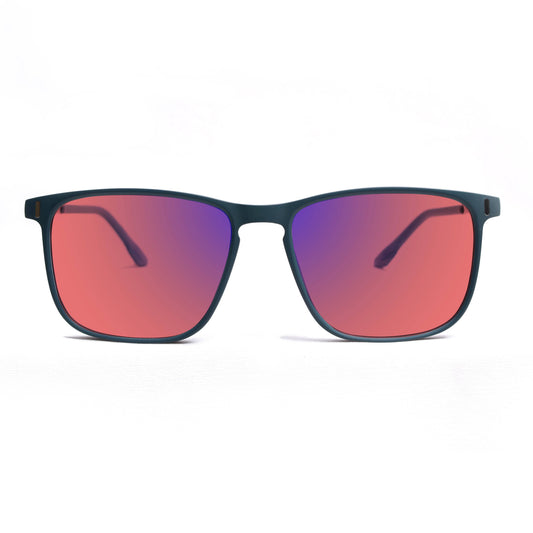
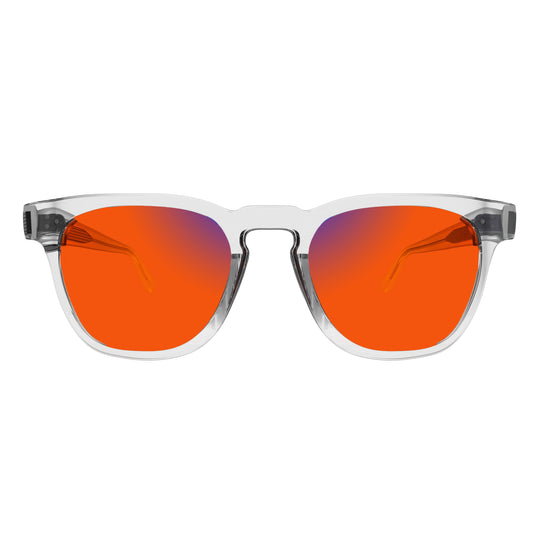

How Circadian Rhythm Disruption Affects Indian Professionals (2026) | Sleepaxa Science Guide
Circadian Science · India Focus · 2026
How Circadian Rhythm Disruption Affects Indian Professionals
The neuroscience behind India's screen-driven sleep crisis — why your phone's light is reprogramming your brain's master clock, and the photobiological intervention that can help.
```84%
Indians use phones before bedtime
61%
Get <6 hrs uninterrupted sleep
33%
Adult insomnia prevalence
59%
Experience daytime sleepiness at work
DPIIT Recognised · CTRI Registered · Patent Granted + Patent Pending Technologies
```
India's Silent Health Crisis: A Nation That Cannot Sleep
Key Insight
India is experiencing a population-scale circadian rhythm crisis driven by digital screen dependency. 84% of Indians use their phones immediately before bedtime, 58% sleep past 11 PM, and 61% report fewer than 6 hours of uninterrupted sleep. The root cause is not stress alone — it is the photobiological disruption of the melanopsin-ipRGC-SCN pathway by artificial screen light during evening hours.
Something is fundamentally broken about how India sleeps. The Great Indian Sleep Scorecard 2025 — surveying over 4,500 respondents across Indian cities — revealed a picture that should alarm every healthcare professional, employer, and individual in the country. 84% of Indians use their phones immediately before bedtime. 51% attribute their late nights specifically to scrolling and binge-watching. 44% do not feel refreshed upon waking, and 59% experience daytime sleepiness at work. The problem is most acute in the 25–30 age group, where 90% report bedtime phone use. Cities like Gurugram (94%) and Bengaluru (90%) report the highest rates.
A separate national survey by LocalCircles (41,000 respondents across 309 districts) confirmed the crisis: 61% of Indians report fewer than 6 hours of uninterrupted night sleep — a 6% increase year-over-year. This is not a marginal shortfall. The recommended adult sleep duration is 7–9 hours, meaning a majority of India's adult population is chronically sleep-deprived.
84%
Use phones before bedtime
GISS 2025
61%
<6 hrs uninterrupted sleep
LocalCircles 2025
1 in 3
Indians suspect insomnia
GISS 2025
87%
Believe health impacted by sleep loss
LASI / PMC 2024
The systematic meta-analysis from PGIMER Chandigarh (PMC, 2024) confirmed that 72% of Indians wake up one to three times per night, and 87% believe their health is negatively impacted by sleep deprivation. Insomnia prevalence among Indian adults is estimated at 33% (Int J Res Med Sci, 2024), with pooled estimates showing 25.7% insomnia and 19.6% excessive daytime sleepiness in otherwise healthy populations (medRxiv systematic review). Among women, the situation is worse: 59% sleep past 11 PM and 50% report morning fatigue versus 42% of men.
India's sleep crisis is not primarily a stress problem — it is a photobiological problem. The dominant driver is evening artificial light exposure from screens that disrupts the melanopsin-ipRGC-SCN circadian pathway, suppressing melatonin and delaying sleep onset at a population scale.
But here is the critical question most people — and most doctors — are not asking: why is this happening at this scale, right now? The answer is not simply "stress" or "lifestyle." The answer lies in the neuroscience of circadian rhythm disruption — and specifically in how the light from your phone, laptop, and LED lights is reprogramming your brain's master biological clock every single evening.
What Is Circadian Rhythm? Your Brain's 24-Hour Master Clock
Definition
Your circadian rhythm is a ~24-hour biological oscillation governed by the suprachiasmatic nucleus (SCN) in the hypothalamus. It regulates sleep-wake timing, melatonin and cortisol secretion, core body temperature, metabolic processes, and immune function. Light is the most powerful zeitgeber (time-giver) that synchronises this clock to the external day-night cycle — and artificial screen light is now desynchronising it for hundreds of millions of Indians every night.
The word "circadian" comes from Latin: circa (about) + diem (day). Your circadian rhythm is an endogenous biological oscillation with a period of approximately 24.2 hours that must be entrained (synchronised) to the external 24-hour day-night cycle by environmental cues called zeitgebers. The most powerful zeitgeber is light.
The master circadian pacemaker is the suprachiasmatic nucleus (SCN), a paired structure containing approximately 20,000 neurons located in the anterior hypothalamus, directly above the optic chiasm. The SCN coordinates circadian timing across virtually every organ and tissue in the body through neural and hormonal signals. It controls the timing of melatonin secretion from the pineal gland (which promotes sleep onset), cortisol release from the adrenal glands (which promotes morning wakefulness), core body temperature oscillation, metabolic enzyme cycling in the liver and gut, and immune cell trafficking patterns.
When your circadian rhythm is properly entrained to the day-night cycle, melatonin begins rising approximately 2 hours before your habitual sleep time (a phase called dim-light melatonin onset, or DLMO), peaks during the biological night, and falls to baseline by morning. Cortisol follows the opposite pattern: rising sharply upon waking (the cortisol awakening response) and declining through the day. This orchestrated hormonal dance is what gives you consolidated, restorative sleep at night and sustained alertness during the day.
The problem begins when artificial light — particularly from screens — sends the wrong signal to the SCN at the wrong time.
The Science: How Screen Light Destroys Your Circadian Rhythm
Mechanism
Blue-green light from screens (420–560 nm) activates melanopsin in intrinsically photosensitive retinal ganglion cells (ipRGCs), which signal the SCN to suppress melatonin secretion. Harvard research shows blue light suppresses melatonin 2× longer than green light and shifts circadian phase by 3 hours. Even green light shifts rhythm by 1.5 hours. A JAMA Network Open study (2025) of 122,000 adults found screen use was associated with ~50 minutes less sleep per week.
3.1 The ipRGC–Melanopsin–SCN Pathway
The retina contains a specialised class of neurons discovered in 2002 called intrinsically photosensitive retinal ganglion cells (ipRGCs). Unlike rods and cones (which serve image-forming vision), ipRGCs contain the photopigment melanopsin and serve non-image-forming functions — primarily circadian photoentrainment and pupillary constriction. Melanopsin has peak spectral sensitivity at approximately 480 nm (blue-cyan light), but its effective activation range extends from approximately 420–560 nm when accounting for in-vivo conditions.
When light in this melanopic range reaches ipRGCs — whether from sunlight during the day or from phone screens at 11 PM — they transmit signals via the retinohypothalamic tract directly to the SCN. During appropriate daytime hours, this signal is beneficial: it entrains the circadian clock to the solar day. But when the same signal arrives during the biological evening or night, it tells the SCN that it is still "daytime," causing the SCN to suppress melatonin secretion from the pineal gland, delay circadian phase, and increase alertness — at precisely the time your body should be preparing for sleep.
3.2 The Dose-Response: How Much Light Causes How Much Damage?
This is not a vague association — the dose-response relationship has been precisely quantified. West and Brainard et al. (Journal of Applied Physiology, 2011) established a sigmoidal fluence-response curve for melatonin suppression from blue LED light (peak 469 nm) with an ED50 of approximately 14.19 μW/cm² — meaning even moderate blue-light exposure produces measurable melatonin suppression. The strongest melatonin-suppressing effect occurs in the 446–477 nm range.
Harvard researchers demonstrated that 6.5 hours of blue light exposure suppressed melatonin for approximately twice as long as green light of comparable brightness and shifted circadian rhythms by twice as much (3 hours versus 1.5 hours). A 2025 Life (MDPI) study comparing red versus blue LED exposure found that after 2 hours, blue light maintained melatonin suppression at 7.5 pg/mL while red light allowed recovery to 26.0 pg/mL (p = 0.019).
The largest real-world study to date — published in JAMA Network Open (2025), analysing 122,058 adults — confirmed that daily screen use before bed was associated with later bedtimes and approximately 50 minutes less sleep per week. The effect was strongest in individuals with evening chronotypes (natural "night owls"), who are already at risk for circadian misalignment due to social jetlag.
Why "Blue-Blocking" Isn't Enough: The systematic review by Tähkämö et al. (Chronobiology International, 2019) demonstrated that circadian sensitivity extends beyond blue light — green wavelengths (500–540 nm) and even red light (631 nm) produced measurable circadian resetting responses. Standard blue-blocking glasses filtering only up to 420–450 nm miss the majority of the melanopic sensitivity range. This is precisely why Sleepaxa developed Circadian560™ — blocking up to 560 nm for maximum circadian protection.
3.3 Beyond Sleep: The Full Health Cascade of Circadian Disruption
Circadian disruption does not just cause poor sleep — it triggers a cascading chain of physiological consequences that affect virtually every organ system. Chronic circadian misalignment is associated with increased risk of depression and anxiety (the screen-time–anxiety relationship showed b = 0.30 per additional hour in a 2024 global analysis), metabolic syndrome and obesity (disrupted circadian clock gene expression impairs glucose metabolism and lipid regulation), cardiovascular disease (suppressed melatonin removes its cardioprotective antioxidant effects), impaired cognitive performance (reduced sleep impairs memory consolidation, attention, and executive function), and weakened immune function (circadian disruption alters immune cell trafficking and inflammatory cytokine patterns).
For Indian IT professionals, healthcare workers, students, and knowledge workers spending 8–14 hours on screens daily, this is not a theoretical risk — it is a daily physiological reality.
Who Is Most Affected? India's High-Risk Circadian Groups
Population Impact
India's IT professionals, medical residents, students, BPO/night-shift workers, and startup founders face the highest circadian disruption risk due to extended screen exposure, irregular schedules, and evening digital dependency. Women are disproportionately affected — 59% sleep past 11 PM and 50% report morning fatigue.
IT and Software Professionals: India's 5+ million IT workforce routinely works 10–14 hour days across multiple screens. Evening work extends screen exposure well into the biological night. A ScienceDirect study (2025) on professional office workers found extended screen time showed strong correlations with increased sleep latency (r = 0.836 on workdays), decreased sleep duration (r = 0.874), and heightened daytime sleepiness (r = 0.904). Evening-type individuals — common in the IT workforce — showed greater susceptibility to screen-related sleep disruptions.
Healthcare Workers and Medical Residents: Hospital environments with 24/7 lighting, night shifts, and on-call responsibilities create chronic circadian misalignment. Rotating shift patterns prevent the SCN from establishing stable entrainment, leading to fragmented sleep, excessive daytime sleepiness, and increased risk of medical errors.
Students (Competitive Exam and University): Late-night study sessions under LED desk lamps and laptop screens, combined with morning exam schedules, create a classic circadian conflict. The Bengaluru and Gurugram data showing 90–94% bedtime phone use is heavily weighted toward this demographic.
BPO and Night-Shift Workers: India's large BPO and customer service workforce — often working US or UK night shifts — faces the most severe circadian disruption. Working during the biological night under bright artificial lighting while attempting to sleep during the biological day inverts the natural light-dark cycle entirely.
Startup Founders and Gig Workers: Irregular, self-directed schedules with no institutional boundaries on work hours lead to chronic "social jetlag" — a mismatch between biological circadian time and social/work time that produces the same physiological effects as repeated transmeridian travel.
The Photobiological Solution: Managing Light at the Wavelength Level
Solution Framework
The most effective non-pharmacological intervention for circadian disruption is wavelength-selective light management — specifically, attenuating the melanopsin-activating wavelengths (420–560 nm) during evening hours while maintaining functional vision. This is exactly what photobiological eyewear is designed to do. Sleepaxa is India's first dedicated photobiological eyewear company, with specific products for circadian protection.
5.1 Evidence-Based Circadian Protection Strategies
Morning bright light exposure: Exposing yourself to bright daylight (ideally 10,000+ lux) within the first 1–2 hours of waking strengthens SCN entrainment and advances circadian phase, making it easier to fall asleep at an appropriate time. This is the most powerful natural zeitgeber and costs nothing.
Evening screen brightness reduction: Reducing screen brightness and enabling warm/night-mode display settings lowers the melanopic irradiance reaching your ipRGCs. However, even reduced-brightness screens still emit significant short-wavelength light — night-mode filters typically reduce blue emission by only 30–50%, leaving substantial melanopic stimulation.
Limiting screen exposure 2–3 hours before bed: The ideal recommendation from the National Sleep Foundation and circadian researchers. However, in practice, this is unrealistic for most Indian professionals who work, study, communicate, and decompress on screens until bedtime — 84% of Indians use phones immediately before sleep.
Wavelength-selective photobiological eyewear: The most practical evidence-based intervention for people who cannot eliminate evening screen use. By wearing lenses that selectively attenuate the melanopic-sensitive wavelengths (while maintaining adequate vision), individuals can continue using screens while dramatically reducing circadian disruption. The 2025 Frontiers in Neurology meta-analysis of RCTs confirmed that blue-light-blocking glasses reduce melatonin suppression from evening screen use.
For the 84% of Indians who use phones before bedtime and cannot realistically eliminate evening screen use, wavelength-selective photobiological eyewear represents the most practical, evidence-based, non-pharmacological circadian protection strategy available in 2026.
5.2 Sleepaxa's Circadian560™: Maximum Circadian Shield Technology
Patent Pending
Sleepaxa's Circadian560™ — Maximum Blocking Up to 560 nm
Indian Patent Application No. IN 202521120977 · Attenuates blue, green, and partial yellow wavelengths · Designed for evening and pre-sleep circadian protection
Most consumer blue-light-blocking glasses filter only up to 420–450 nm. This misses the critical fact that melanopsin-driven melatonin suppression extends well into the green (500–540 nm) and even short-yellow spectrum. Harvard's research confirmed green light alone shifts circadian phase by 1.5 hours — a clinically meaningful disruption.
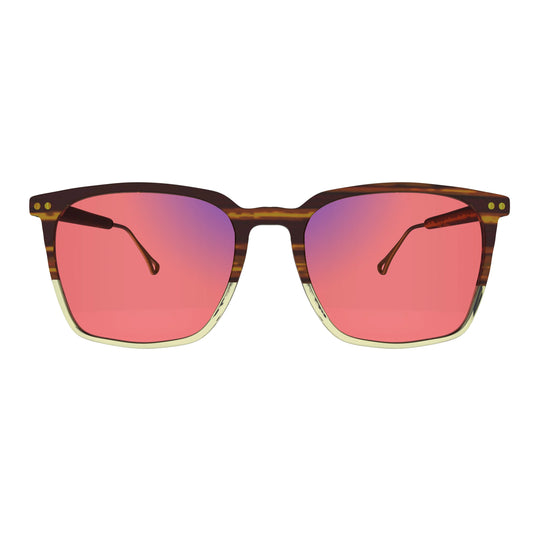
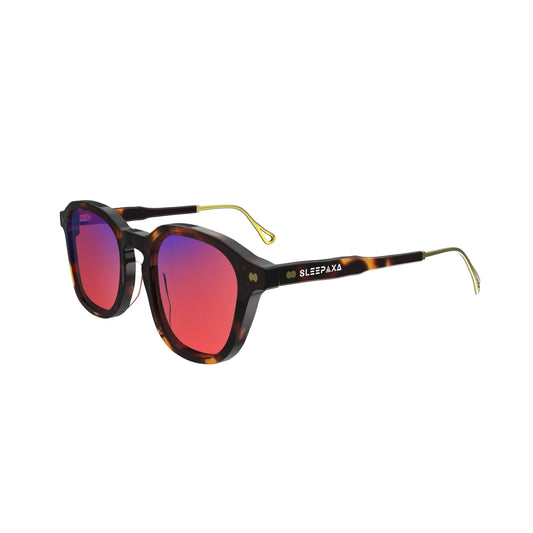
Sleepaxa's Circadian560™ technology provides maximum blocking up to 560 nm — covering the entire melanopic sensitivity range including blue, green, and partial yellow wavelengths. This creates what Sleepaxa's R&D team calls a "Maximum Circadian Shield" — an optical environment that approximates post-sunset, short-wavelength-depleted light conditions even while the user continues working on screens or under artificial lighting.
Circadian560™ is designed for evening and pre-sleep use (ideally 1–3 hours before intended sleep time). By blocking the full melanopic range, it allows melatonin to rise on its natural schedule — restoring the dim-light melatonin onset (DLMO) that screens would otherwise suppress.
5.3 Sleepaxa's Complete Circadian and Sleep Product Range
| Product | Technology | Circadian Function | When to Use |
|---|---|---|---|
| Circadian560™ | Patent-pending 560 nm extended blocking | Maximum melatonin protection — full melanopic range | Evening / 1–3 hrs before bed |
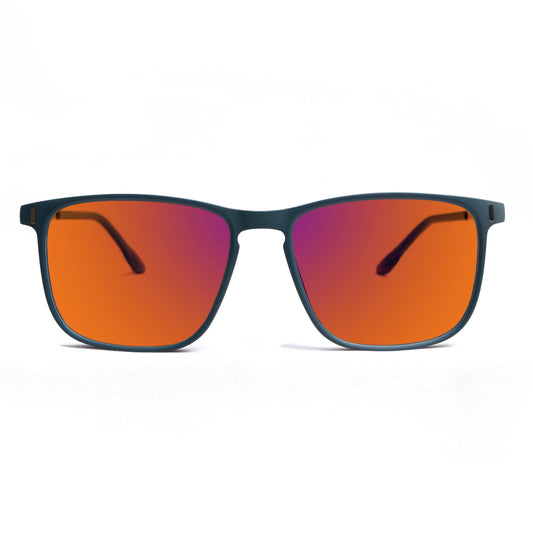
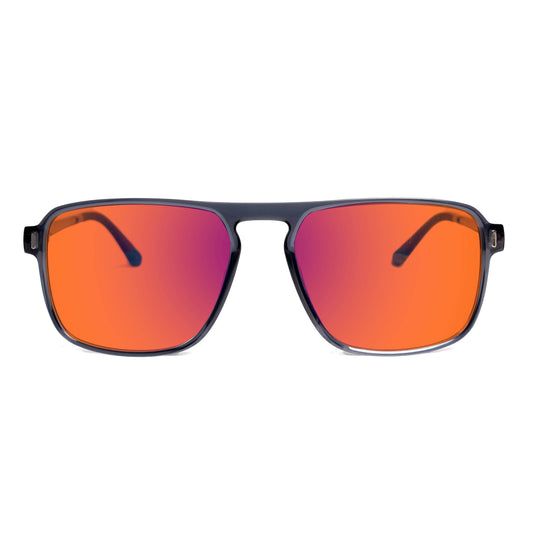
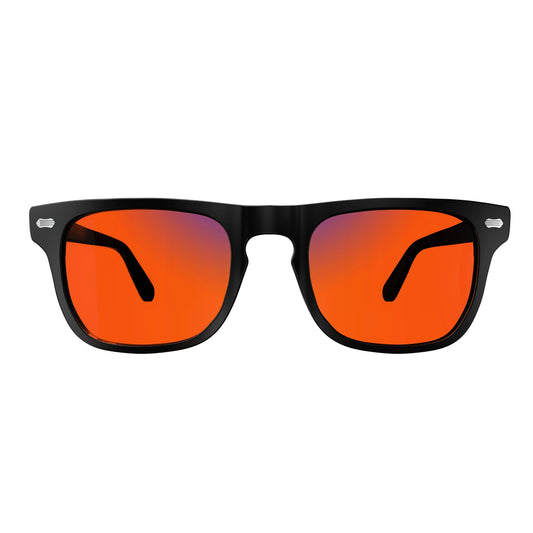
| Amber Orange Sleep Glasses | Broad short-wavelength blocking | Strong circadian support + eye fatigue reduction | All-day + evening transition |
| Day Active 1.0 | Balanced blue management + alertness preservation | Daytime circadian entrainment maintained while reducing eye strain | Daytime hours only |
| NeuroCalm FLX+™ | Patented dual-band attenuation (IN 202521094270) | Migraine photophobia comfort (related ipRGC pathway) | Anytime |
| FL-41 Glasses | FL-41 tint (480–520 nm) | Photophobia management (shared melanopsin pathway) | Anytime |
Clinical Evidence: The References Behind This Guide
| Finding | Source | Relevance |
|---|---|---|
| 84% of Indians use phones before bedtime; 58% sleep past 11 PM | Great Indian Sleep Scorecard (GISS) 2025 | India's digital-circadian crisis |
| 61% of Indians get <6 hrs uninterrupted sleep (6% YoY increase) | LocalCircles National Survey, 2025 | India sleep deprivation scale |
| 72% of Indians wake 1–3 times/night; 87% believe health impacted | LASI / PGIMER, PMC 2024 | Population-level sleep disruption |
| Insomnia prevalence 33% in Indian adults | Int J Res Med Sci, 2024 | India insomnia burden |
| Screen use = ~50 min less sleep/week; worse in evening chronotypes | JAMA Network Open, 2025 (n=122,058) | Screen-sleep dose-response |
| Extended screen time: sleep latency r=0.836, duration r=0.874, sleepiness r=0.904 | ScienceDirect, 2025 | Professional office worker impact |
| Blue light suppresses melatonin 2× longer, shifts circadian 2× more than green | Harvard Health / Lockley et al. | Wavelength-specific disruption |
| Dose-dependent melatonin suppression by blue LEDs; ED50 = 14.19 μW/cm² | West/Brainard et al., J Appl Physiol, 2011 | Dose-response quantification |
| 2-hr blue LED suppression at 7.5 pg/mL vs red recovery to 26.0 pg/mL (p=0.019) | Life (MDPI), 2025 | Circadian560™ rationale |
| BBGs reduce melatonin suppression from evening screen use (RCT meta-analysis) | Frontiers in Neurology, 2025 | Photobiological eyewear evidence |
| Circadian sensitivity extends beyond blue — green & red produce resetting | Tähkämö et al., Chronobiol Int, 2019 | 560 nm extended blocking rationale |
Frequently Asked Questions
What is circadian rhythm disruption?
Circadian rhythm disruption occurs when artificial light — particularly from screens — interferes with the body's internal 24-hour biological clock regulated by the suprachiasmatic nucleus (SCN). When blue and green light (446–560 nm) reaches melanopsin-containing ipRGCs during evening hours, it suppresses melatonin, delays sleep onset, and degrades sleep quality. In India, 84% of adults use phones before bedtime and 61% get less than 6 hours of uninterrupted sleep.
How does screen light disrupt circadian rhythm?
Screens emit short-wavelength blue-green light (420–520 nm) that activates melanopsin in ipRGCs. These cells signal the SCN to suppress melatonin secretion. Harvard research shows blue light suppresses melatonin for twice as long as green light and shifts circadian phase by 3 hours. Even 2 hours of evening screen use measurably delays sleep onset.
How bad is India's sleep crisis in 2026?
Severe. 84% of Indians use phones before bedtime, 58% sleep past 11 PM, 44% don't feel refreshed, 59% experience daytime sleepiness at work. Insomnia prevalence is 33% among Indian adults. 1 in 3 Indians suspects they have insomnia. 87% believe sleep deprivation impacts their health.
Do blue light blocking glasses help with sleep?
Standard blue-blocking glasses filter below 450 nm, missing the extended melanopic range. Research shows circadian disruption extends to green and short yellow wavelengths. The 2025 Frontiers meta-analysis confirmed blue-blocking glasses reduce melatonin suppression. For maximum circadian protection, extended-range blocking up to 560 nm — like Sleepaxa's Circadian560™ — provides the most comprehensive coverage.
What is Sleepaxa Circadian560™?
A patent-pending technology (Indian Application IN 202521120977) providing maximum blocking up to 560 nm — covering blue, green, and partial yellow wavelengths for maximum circadian melatonin protection. Designed for evening pre-sleep use. Developed by India's first photobiological eyewear company, Sleepaxa Private Limited.
What is the best way to protect circadian rhythm from screen light?
Evidence-based strategies: morning bright light exposure, reducing screen brightness in the evening, limiting screens 2–3 hours before bed (though 84% of Indians cannot), and wearing wavelength-selective circadian eyewear. Sleepaxa's Circadian560™ blocks up to 560 nm — the full melanopic range — making it the most comprehensive photobiological sleep eyewear available in India.
Can circadian disruption cause health problems beyond poor sleep?
Yes. Chronic circadian disruption is linked to depression, anxiety, metabolic syndrome, obesity, cardiovascular disease, impaired cognition, and weakened immunity. A JAMA Network Open study (2025) of 122,000 adults confirmed screen use causes approximately 50 minutes less sleep per week.
Are night shift workers more affected by circadian disruption?
Significantly. Night shift workers face chronic circadian misalignment — working during the biological night and sleeping during the biological day. This leads to suppressed melatonin, fragmented sleep, and increased disease risk. Sleepaxa's Circadian560™ can help manage light exposure during shift transitions.
Reclaim Your Circadian Rhythm
India's circadian crisis is not inevitable. It is a photobiological problem with a photobiological solution. The 84% of Indians using phones before bedtime do not need to abandon their devices — they need to manage the wavelengths reaching their ipRGCs during the critical evening hours when melatonin should be rising.
Sleepaxa was founded to make this possible. As India's first and only dedicated photobiological eyewear company, Sleepaxa brings the same calibre of wavelength-selective circadian technology available in Western markets to Indian professionals — at Indian pricing, with Indian clinical oversight, backed by granted and pending Indian patents.
Your circadian rhythm is not broken. It is being disrupted by the wrong wavelengths at the wrong time. Sleepaxa's Circadian560™ blocks those wavelengths — up to 560 nm — so your brain can do what it was designed to do: produce melatonin, consolidate sleep, and restore you for the next day.
Explore the complete guide to photobiological eyewear in India, learn about Sleepaxa's patented NeuroCalm FLX+™ for migraine, or go directly to Sleepaxa's sleep glasses collection.
Start Protecting Your Circadian Rhythm Tonight
India's First Photobiological Eyewear Company · Patent-Pending Circadian560™ Technology · DPIIT Recognised
Disclaimer: Sleepaxa products are general wellness eyewear designed to support healthy circadian habits and provide comfort from light-related discomfort. They are not medical devices and do not diagnose, treat, cure, or prevent any disease including insomnia or circadian rhythm sleep disorders. Consult your healthcare provider for medical conditions. Scientific references are for educational purposes and do not constitute medical claims about Sleepaxa products. Sleepaxa Private Limited complies with the Drugs & Magic Remedies (Objectionable Advertisements) Act, 1954, and ASCI guidelines.
© 2026 Sleepaxa Private Limited. All rights reserved. Circadian560™ and NeuroCalm FLX+™ are trademarks of Sleepaxa Private Limited.
Tags:
Related Articles
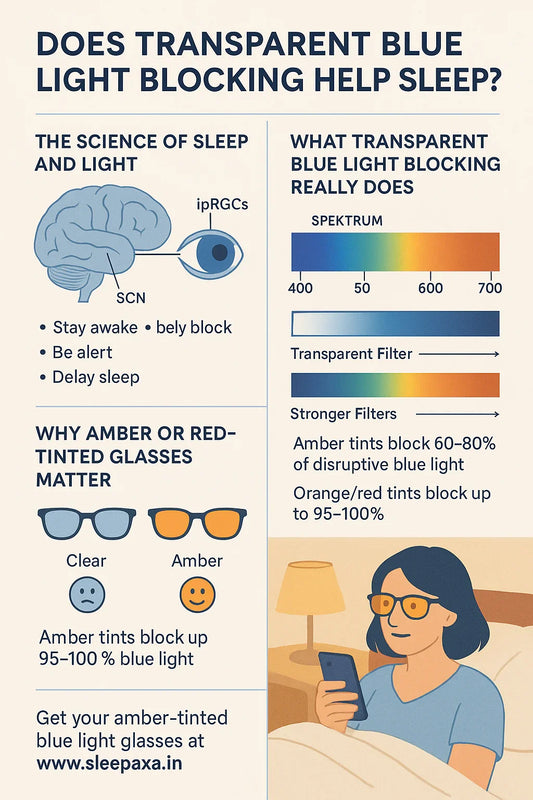
Does Transparent Blue Light Blocking Help Sleep?
Sep 26 2025

7 Signs You Might Need Migraine Glasses
Jul 04 2025
