

Research & Development 🔬
Research & Development by Acieon Labs
India's first research-driven
photobiological eyewear
company.
Sleepaxa Private Limited builds precision-filtered optics for migraine relief, photophobia care, sleep restoration, and circadian health. The research, patents, and spectral science behind them are developed by Acieon Labs, its in-house research & IP division, and documented as 9 DOI-linked open-access research works, two granted Indian patents (No. 587746 and No. 597482), and four pending applications.
DPIIT Recognised Startup
Granted Indian Patent No. 587746
9 Open-Access Research Works · Zenodo
Science & IP by Acieon Labs
Company Structure
One company.
Two divisions.
Sleepaxa Private Limited operates two divisions: one builds the products you wear, the other builds the science and IP behind them.
Parent Company
Sleepaxa Private Limited
Sleepaxa
Product & Commercial Division
Handles photobiological eyewear products, prescription fulfilment, consultation, customer support, and delivery. Everything you buy and wear: migraine, sleep, photophobia, and day-active optics.
Products & Rx
Consultation
Support & Fulfilment
Acieon Labs
Research & Intellectual Property Division
Develops and documents the science, patents, and publications behind Sleepaxa's technologies: photobiology, wavelength-selective filtration, circadian optics, and ophthalmic lens IP. Publishes openly; sells nothing.
Patents & IP
Open Research
Photobiology Science
The Sleepaxa Difference
Most eyewear is sourced.
Ours is engineered.
Most blue-light blocking and migraine glasses sold in India are pulled from generic manufacturing catalogs, with random tints applied. Sleepaxa builds from the wavelength up, guided by Acieon Labs' photobiology research, defining which light bands to filter, which to preserve, and how to balance both for real-world wearable comfort.
9
Open-Access Research Works
2
Granted Indian Patents
4
Pending Applications
6
Disclosed Inventions
Industry Reality
Sleepaxa engineers from the wavelength, not the catalog.
Most products labelled "blue light blockers" or "migraine glasses" in the Indian market follow generic manufacturing templates with arbitrary tint depth. Sleepaxa differentiates through proprietary filtration targeting, optometry-led selection protocols, and patent-pending spectral programs, built around Acieon Labs' photobiology research, ipRGC pathway studies, and circadian optics engineering, all openly published on Zenodo.
The Architects
Built by people who
spent their lives on light.
Decades of clinical optometry. Years of optical engineering research. Combined into a single mission: building the eyewear India should have always had.

Mr. Suraj Dubey
Founder · Head of Research, Acieon Labs
10+ years of dedicated experience in clinical optometry, optical comfort engineering, and selective wavelength research. Inventor behind the granted Indian Patent No. 587746 (NeuroCalm FLX+) and the patented Circadian560 architecture (Patent No. 597482), developed under Acieon Labs, focused on bridging photobiology research with real-world wearable comfort.
Optical Engineering
Photobiology Research
Granted Patent Inventor

Dr. Monica Chaudhry
Founding Clinical Advisor · 37+ Years
Decades of clinical optometry expertise, including service at AIIMS (Retd.). Brings rigorous comfort validation, real-world usability protocols, and optometry-informed selection science to Sleepaxa's product development. Anchors the clinical perspective for light-triggered sensitivity care.
AIIMS Retd.
Clinical Educator
Comfort Validation
Research Foundation
The science we build on.
The pillars we stand on.
Every Sleepaxa product is grounded in three converging fields of light science, researched and documented by Acieon Labs.
i.
Wavelength-Selective Filtration
The foundation of photobiological eyewear. Engineering precise filtration zones that target problematic wavelengths while preserving comfort-critical perception bands: the science behind every Sleepaxa lens.
ii.
ipRGC Pathway Science
Intrinsically photosensitive retinal ganglion cells (ipRGCs) regulate the brain's response to specific wavelengths. Their activation triggers migraine pain pathways and suppresses melatonin. Our research informs every filtration design.
iii.
Circadian Optics Engineering
Modern sleep research has identified the precise wavelength bands that suppress melatonin production. Our Circadian560 spectral architecture is engineered around this science, extending filtration to 560 nanometers for maximum protection.
Published Research
Research by Acieon Labs.
Open access. Open science.
Nine DOI-linked open-access research works published on Zenodo by Acieon Labs, covering every dimension of photobiological eyewear engineering, ipRGC pathway science, and the science behind our patented optical programs.
Click any work to read the full record on Zenodo
i
Foundational Research
Wavelength-Selective Filtration in Photobiological Eyewear
10.5281/zenodo.19422123→
ii
Neural Science
ipRGC Subtypes, Signalling Pathways, and Implications for Photobiological Eyewear Design
10.5281/zenodo.19500137→
iii
Patent No. 587746
Dual-Band Selective Light Attenuation: Engineering Principles Behind NeuroCalm FLX+
10.5281/zenodo.19547790→
iv
Circadian Engineering
Circadian560 Spectral Engineering: Sub-560 nm Cutoff for Maximum Melanopic Protection
10.5281/zenodo.19596183→
v
Migraine & Photophobia
Photophobia in Migraine: Neural Mechanisms, Epidemiological Burden, and Wavelength-Selective Management
10.5281/zenodo.19644849→
vi
India Epidemiology
The Light Sensitivity Epidemic in India: Prevalence, Pathophysiology, and the Case for Photobiological Intervention
10.5281/zenodo.19683319→
vii
Industry Critique
Limitations of Commercial Blue-Light-Filtering Spectacle Lenses
10.5281/zenodo.19762610→
viii
Clinical Framework
Photobiological Eyewear in Optometric Practice: A Clinical Decision Framework for Condition-Specific Wavelength-Selective Lens Recommendation in Migraine, Sleep Disorders, and Photic Discomfort
10.5281/zenodo.19954037→
ix
Patent Portfolio
Patented Innovations in Photobiological Eyewear: A Technical Overview of Indian Contributions to Wavelength-Selective Filtration, Circadian Optics, and Adaptive Lens Technologies
10.5281/zenodo.20120524→
Proprietary Programs
Patented optics,
built in India.
Acieon Labs' R&D pipeline has produced two granted patents and patent-pending spectral programs, each engineered around a specific clinical need.
™
NeuroCalm FLX+
Granted Indian Patent No. 587746
Dual-band selective attenuation engineered for photophobia and visual sensitivity. Targets the migraine trigger zone while preserving soothing green wavelengths for visual comfort.
™
Circadian560
Patented IN 597482
Precision night filtration extending up to 560 nm: the maximum threshold for melatonin protection. Built specifically for circadian health and pre-sleep light hygiene.
™
Upcoming Programs
In Development
Color-discrimination support architecture, advanced photobiology lens systems, and next-generation comfort-first optical programs currently in our R&D pipeline.
Sleepaxa Optical Programs
Four categories.
One science.
India's most comprehensive photobiological eyewear lineup: from clinical migraine relief to circadian sleep restoration.
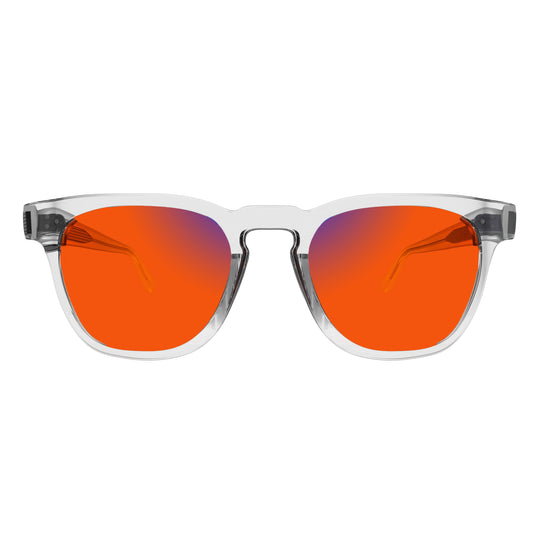
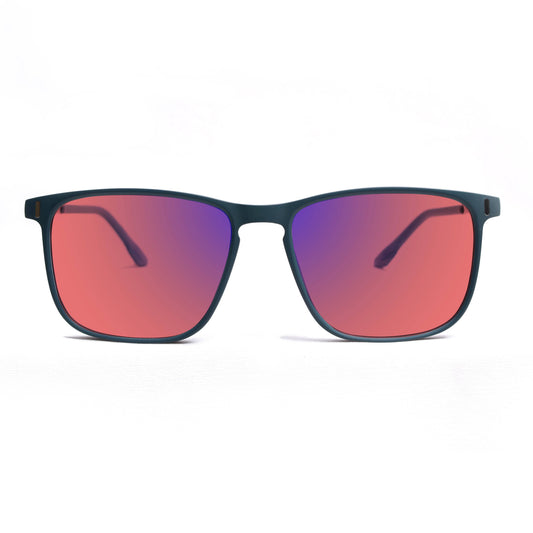
FL-41 · Photophobia
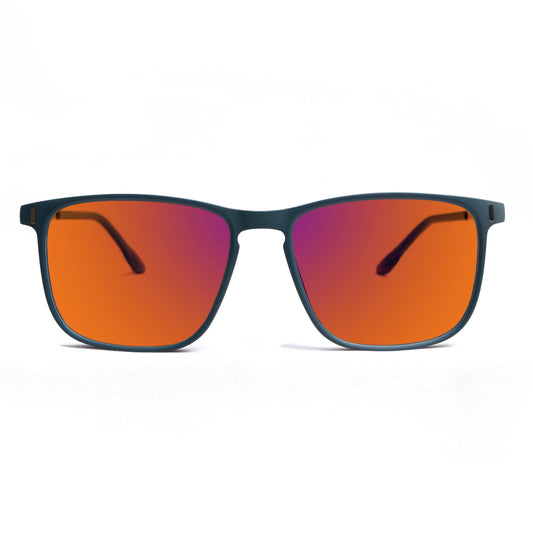
FL-41 Migraine Glasses
Clinical-grade rose-amber filtration engineered for chronic migraine, photophobia, and light-triggered sensitivity. Backed by the science behind our granted Indian Patent No. 587746 (NeuroCalm FLX+).
- Targets migraine trigger wavelength band
- Reduces fluorescent & LED screen sensitivity
- Preserves natural colour perception
- Available in Light (50% VLT) & Dark (40% VLT) tints
- Indoor + outdoor wearable
Photophobia · Light Sensitivity
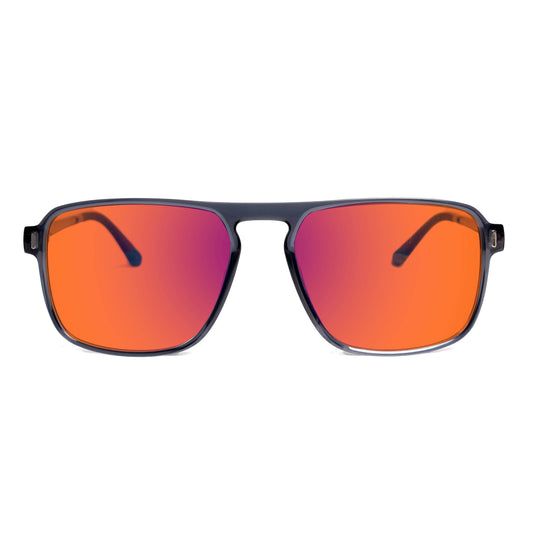
Photophobia Glasses
Spectral architecture designed for chronic light sensitivity, post-concussion light intolerance, and clinical-grade photophobia management. Engineered for those who feel light too intensely.
- Reduces high-energy visible light intensity
- Calms ipRGC-mediated discomfort response
- Built for chronic photophobia sufferers
- Optometrist-validated tint depths
- Suitable for indoor, outdoor & mixed lighting
Sleep · Circadian Health
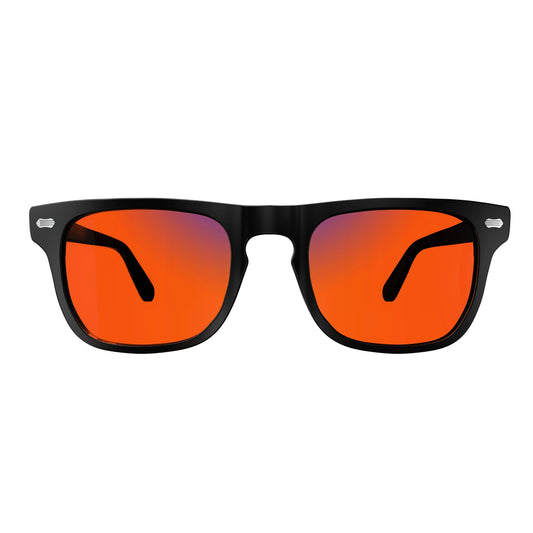
Amber Sleep Glasses
Patented Circadian560 filtration with sub-560 nm cutoff: the maximum threshold for melanopic protection. Advanced circadian sleep-lens filtration engineered in India.
- Blocks blue light at the biological melatonin-suppression peak
- Sub-560 nm spectral cutoff
- Preserves soothing green wavelengths
- Built for evening screens & pre-sleep routines
- Supports evening light hygiene
Day · Focus & Productivity
Blue Light Blocking Glasses
Day-time focus optics that reduce harsh screen intensity without over-darkening. Engineered to preserve alertness while protecting eyes from prolonged digital exposure.
- Balanced filtration for daytime productivity
- Preserves blue-violet alertness cues
- Reduces digital eye strain & fatigue
- Anti-reflective & anti-glare coating
- Ideal for office, study & gaming
The Acieon Labs Method
How we engineer
photobiological eyewear.
i.
Spectral Architecture
We define target wavelength zones (trigger regions) and comfort-preservation bands first. The tint depth comes after the filtration profile, never the other way around.
ii.
Clinical Validation
Optometrist-led usability testing for long-wear comfort. Optimised against real-world environments: screens, fluorescent offices, outdoor light, indoor LEDs.
iii.
Lab Verification
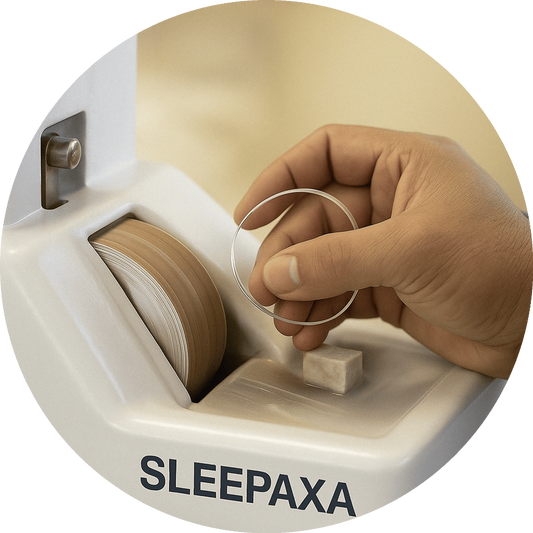
Spectrophotometry curves validate UVA/UVB attenuation and visible-light filtration profile across every batch. Every lens documented. Every batch verified.
"
Comfort isn't achieved by blocking everything. It's achieved by engineering the right wavelengths.
Speak with our team
Not sure which Sleepaxa
is right for you?
Talk to a Sleepaxa Expert on WhatsApp. Real optometry-trained humans, fast replies, and zero scripted answers. Get guidance on tint intensity, prescription, lens index, and frame fit.
Talk to a Sleepaxa Expert →This page focuses on optical engineering, photobiology research, and comfort science, based on open research published by Acieon Labs, the research & IP division of Sleepaxa Private Limited. Patent filings and grants describe intellectual property protection, not medical-device approval or clinical clearance. Sleepaxa products are assistive visual-comfort eyewear, not medical devices, and are not intended to diagnose, treat, cure, or prevent any condition. This is not medical advice. Clinical decisions should be made with a qualified healthcare provider.
Evidence, patents, and open research
Sleepaxa's optical programs are documented through Acieon Labs: nine DOI-linked open-access research works on Zenodo, two granted Indian patents (No. 587746 and No. 597482), and four pending applications. Explore the full evidence library, patent disclosures, and spectral methodology.
Explore the Acieon Labs evidence library →