
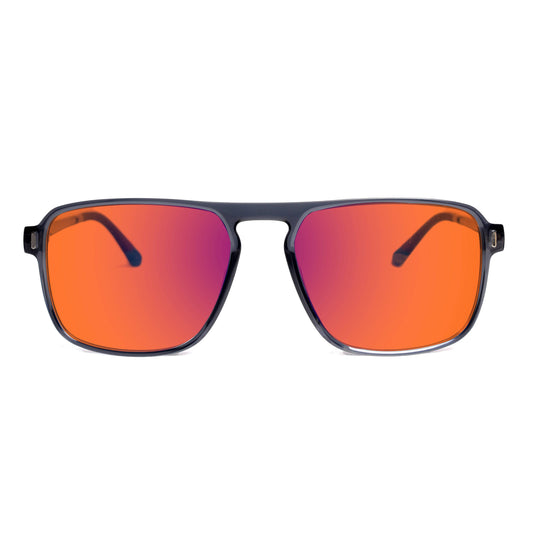
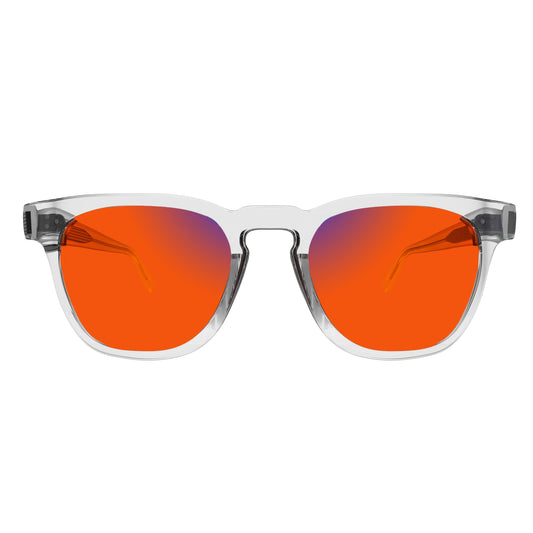
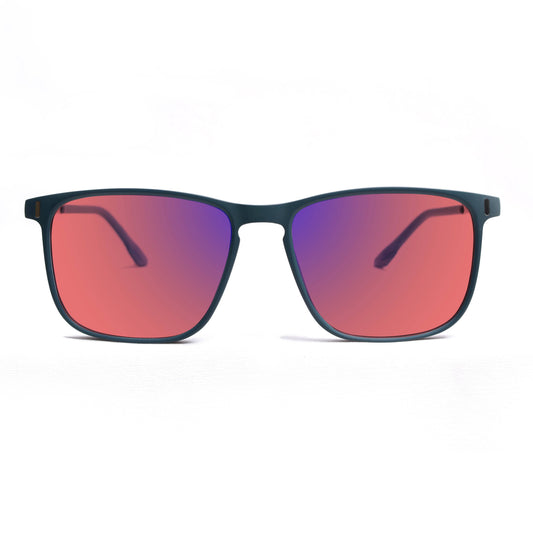

Do FL-41 Glasses Really Work for Migraine and Light Sensitivity? What the Research Says
Quick answer: Yes, for many people with light-triggered symptoms — but not for everyone, and not as a cure. FL-41 is the most-studied tint for migraine and photophobia. Studies since 1991 link it to fewer migraine attacks in children, less light sensitivity in blepharospasm, and calmer light-response pathways on brain scans. The studies are small, so the honest answer is: FL-41 is a well-supported comfort tool for light sensitivity, best used alongside your doctor’s migraine plan. Try Sleepaxa FL-41 Migraine Glasses →

Why light hurts in migraine
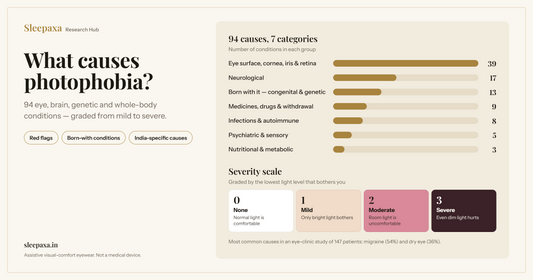
Light sensitivity, or photophobia, is one of the most common migraine symptoms. Two parts of the eye are involved:
- ipRGCs (melanopsin cells). These retinal cells respond most to light around 480 nm and connect to brain areas involved in pain and alertness.
- Cone pathways. Research from Harvard (Noseda et al., Brain, 2016) found that cone-driven signals also shape photophobia — and that narrow-band green light around 520 nm hurt less than other colours for many patients.
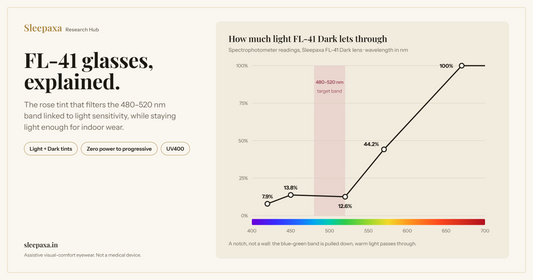
FL-41 targets the blue-green zone where these effects concentrate, while keeping enough light for normal indoor vision.
What the studies found
| Year | Study | What it found |
|---|---|---|
| 2024 | FL-41 and chronic ocular pain (fMRI) | FL-41 reduced activation of photophobia-related brain pathways in patients with chronic eye pain. |
| 2016 | Hoggan et al., J Clin Neurosci — 480 nm notch filter vs 620 nm sham | Both lenses reduced headache-impact (HIT-6) scores; the 480 nm lens was designed because FL-41 cannot be made dark enough at 480 nm for indoor use. |
| 2011 | Huang et al., Cephalalgia — precision tints (fMRI) | Precision tints reduced over-activation of the visual cortex in people with migraine. |
| 2009 | Blackburn et al., Ophthalmology — blepharospasm | FL-41 improved blink frequency, light sensitivity and daily function better than grey or plain rose tints; most patients preferred FL-41. |
| 1991 | Good, Taylor & Mortimer, Headache — children with migraine | Monthly attacks fell from 6.2 to 1.6 with FL-41; a blue tint worked less well. |
Where the evidence is thin
We would rather tell you this than oversell:
- Small studies. Most FL-41 trials had tens of participants, not thousands.
- Placebo matters. In the 2016 notch-filter trial, the sham lens also helped. Part of the benefit of any tinted lens may be expectation.
- Flicker has changed. The scientist credited with designing FL-41 has noted it was built partly to reduce flicker from old fluorescent tubes, and that modern lighting has changed the picture. FL-41 today is best understood as a spectral filter, not an anti-flicker device.
- Fake “FL-41” exists. Eye-care references warn that some lenses sold as FL-41 don’t filter like FL-41. A lens that isn’t measured can’t be trusted.
Who is most likely to benefit
- People whose migraines are clearly worse under tube lights, LED panels, screens or bright daylight.
- People who reach for sunglasses indoors — FL-41 Light is a gentler, all-day alternative.
- People with light sensitivity after a concussion, or with blepharospasm.
- People who already wear glasses and want the filter built into their prescription.
If light is not one of your triggers, FL-41 glasses are unlikely to change much. A neurologist or ophthalmologist can help you work out your triggers.
How Sleepaxa applies the research
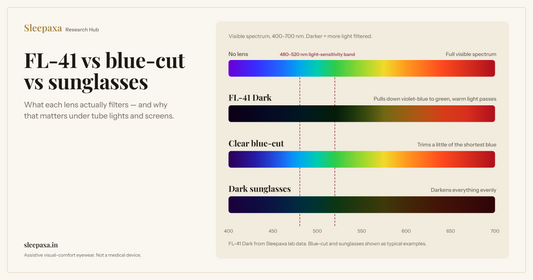
- We measure every tint. FL-41 Dark lets through 7.9% at 420 nm, 13.8% at 450 nm and 12.6% at 520 nm, then opens to 44.2% at 570 nm and 100% above 670 nm. That is a notch, not a dark wall.
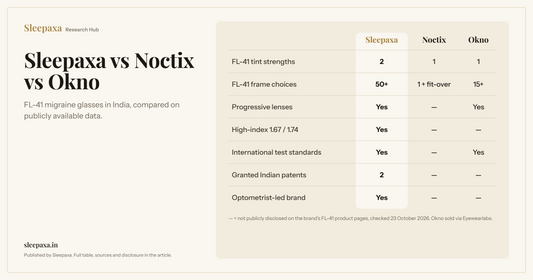
- We offer two strengths. FL-41 Light for all-day comfort; FL-41 Dark for severe sensitivity.
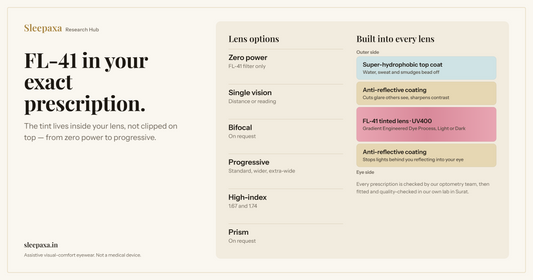
- We put it in your prescription. Zero power through progressive, high-index and prism, verified by our optometry team.
- We keep researching. Our R&D division, Acieon Labs, developed NeuroCalm FLX+, a dual-band design (460–490 nm and 585–600 nm) protected by granted Indian patent IN 587746 — a separate technology for people who want to go beyond classic FL-41.
- We publish. Our founder, optometrist Suraj Dubey, is first author of a 2026 peer-reviewed, PubMed-indexed review on evening LED light and melanopsin (Cureus, PMID 42524168).
Explore Sleepaxa FL-41 Migraine Glasses →
FAQ
Is there scientific evidence for FL-41 glasses?
Yes. Studies from 1991 to 2024 link FL-41 to reduced migraine frequency in children, reduced light sensitivity in blepharospasm, and reduced activity in photophobia pathways on brain scans. The studies are small, so results vary person to person.
How long do FL-41 glasses take to work?
Most people notice that harsh light feels softer as soon as they put them on. Any change in how often light-triggered headaches happen is best judged over 4–8 weeks of regular wear.
Why 480 nm?
The melanopsin pigment in ipRGC cells responds most strongly near 480 nm, and these cells connect to brain areas involved in light-triggered discomfort.
Are FL-41 glasses better than blue-light glasses for migraine?
For light-triggered migraine, FL-41 is the tint with the most research. Clear blue-cut lenses filter much less of the 480–520 nm band.
Can FL-41 glasses replace migraine medicine?
No. They are assistive visual-comfort eyewear. Never stop or change medicines without your doctor.
Do FL-41 glasses help with post-concussion light sensitivity?
FL-41 is widely used for light sensitivity after concussion, though the evidence there is more limited. Discuss it with your treating doctor.
References
- Good PA, Taylor RH, Mortimer MJ. The use of tinted glasses in childhood migraine. Headache. 1991;31(8):533–536. PubMed
- Blackburn MK, et al. FL-41 tint improves blink frequency, light sensitivity, and functional limitations in patients with benign essential blepharospasm. Ophthalmology. 2009. PMC
- Huang J, et al. fMRI evidence that precision ophthalmic tints reduce cortical hyperactivation in migraine. Cephalalgia. 2011. Journal
- Hoggan RN, Subhash A, Blair S, Digre KB, et al. Thin-film optical notch filter spectacle coatings for the treatment of migraine and photophobia. J Clin Neurosci. 2016;28:71–76. PMC
- Noseda R, et al. Migraine photophobia originating in cone-driven retinal pathways. Brain. 2016;139:1971–1986.
- FL-41 tint reduces activation of neural pathways of photophobia in patients with chronic ocular pain. 2024. PMC
- Wilkins A. Response to “Optical lens tinting — a review of its functional mechanism, efficacy and applications.” touchREVIEWS in Ophthalmology. Article
- EyeWiki. Optical lens tinting and wavelength-specific filters. EyeWiki
- Dubey SA, Elango N, Coelho LB, Chaudhry M. Evening light-emitting diode screen exposure, melanopsin-mediated circadian disruption, and optical filtration for sleep hygiene: a narrative review in the Indian context. Cureus. 2026;18(7). doi:10.7759/cureus.113484
Read next: FL-41 vs Blue-Light Glasses vs Sunglasses · Sleepaxa vs Noctix vs Okno
Sleepaxa eyewear is assistive visual-comfort eyewear, not a medical device. Individual experience varies; speak with your doctor about migraine management.
Tags:
Previous
Sleepaxa vs Noctix vs Okno: Best FL-41 Migraine Glasses in India (2026)
Next
Prescription, Progressive & Zero-Power FL-41 Glasses in India: Lens Options, Coatings and Prices