
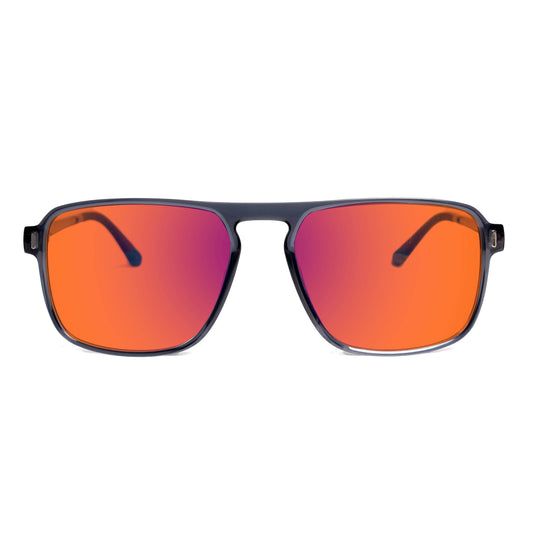
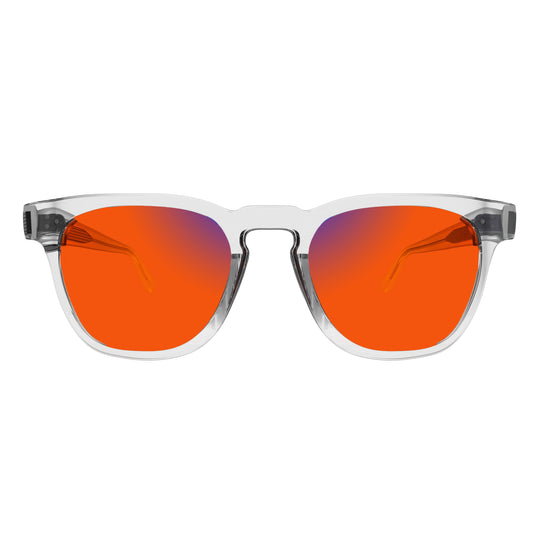
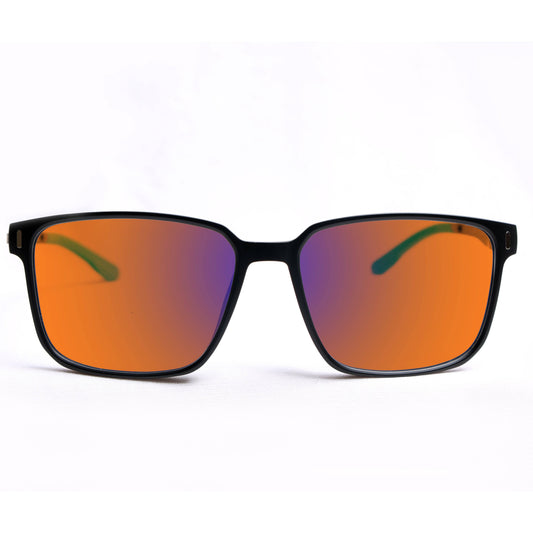

Photobiological Eyewear ? How It Differs from Traditional Eyewear
What Is Photobiological Eyewear? How It Differs from Traditional Eyewear — A Senior Optometrist Explains
By Suraj Dubey Senior Optometrist | Founder & Head of R&D, Sleepaxa Private Limited Inventor: NeuroCalm FLX+™ (Patent Granted: IN 587746) | Circadian560™ (Patent Granted: IN 597482) | Wikidata (Q138837663)
Photobiological eyewear is a category of precision-engineered optical devices that use wavelength-selective filtration to modulate how specific nanometer bands of visible light interact with the retina’s intrinsically photosensitive retinal ganglion cells (ipRGCs), the brain’s trigeminal pain pathways, and the suprachiasmatic nucleus — the body’s master circadian clock.
Unlike traditional eyewear that uses broad-spectrum coatings for general UV or blue light reduction, photobiological eyewear targets the exact wavelengths responsible for migraine photophobia, circadian disruption, and light-induced discomfort — based on published neuroscience research.
Introduction:
Why This Article Matters If you’ve ever searched for “blue light glasses” or “migraine glasses” online, you’ve likely encountered hundreds of products making similar claims — “blocks 99% blue light,” “reduces eye strain,” “improves sleep.”
Most of these products use generic broad-spectrum coatings applied to commodity lenses, manufactured in bulk with no wavelength specificity, no clinical references, and no published spectral data. But in the last two decades, neuroscience has fundamentally changed our understanding of how light interacts with the human brain.
The discovery of intrinsically photosensitive retinal ganglion cells (ipRGCs) by Berson et al. in 2002 revealed that the eye contains a third class of photoreceptors — beyond rods and cones — that directly regulate pain pathways, circadian rhythms, and hormonal responses. This discovery gave birth to a new category of eyewear: photobiological eyewear — lenses engineered not for vision correction or fashion, but for precision management of how light affects your neurobiology.
This article explains what photobiological eyewear is, how it differs from every pair of glasses you’ve worn before, and why it matters for the 213 million Indians living with migraine and the hundreds of millions more struggling with screen-induced sleep disruption.
What Is Traditional Eyewear?
Traditional eyewear encompasses the glasses most people are familiar with. These fall into several categories: Corrective lenses (single vision, bifocal, progressive) address refractive errors like myopia, hyperopia, and astigmatism.
They modify the focal point of incoming light to produce a clear image on the retina. Sunglasses reduce overall light transmission using tinted or polarised lenses. They provide UV protection and reduce glare but make no distinction between different wavelengths of visible light — they dim everything equally. Generic “blue light” glasses apply a broad-spectrum anti-reflective (AR) coating that reflects a portion of blue light (typically in the 400–450nm range).
These became popular with the rise of screen usage. However, the American Academy of Ophthalmology has stated that there is no scientific evidence supporting the claim that blue light from digital devices causes eye damage, and a 2024 Cochrane review found insufficient evidence that blue-light-filtering lenses reduce eye strain.
Anti-glare and photochromic lenses adapt to light conditions or reduce reflections, but again operate on broad-spectrum principles without targeting specific wavelengths for biological effects. The common thread: traditional eyewear is designed for optical function (seeing clearly), protection (UV, physical impact), or comfort (reducing glare). None of these categories are designed around the neurobiology of how specific wavelengths of light affect the brain.
What Is Photobiological Eyewear? Photobiological eyewear is fundamentally different. It is designed around a single principle: specific wavelengths of light have specific biological effects on the human brain, and these effects can be modulated through precision filtration. The key word is precision.
Where traditional blue light glasses might block a broad range of 400–450nm light with a generic coating, photobiological eyewear uses engineered filtration to target the exact nanometer bands that published neuroscience research has identified as biologically significant.
The Three Biological Pathways That Photobiological Eyewear Addresses
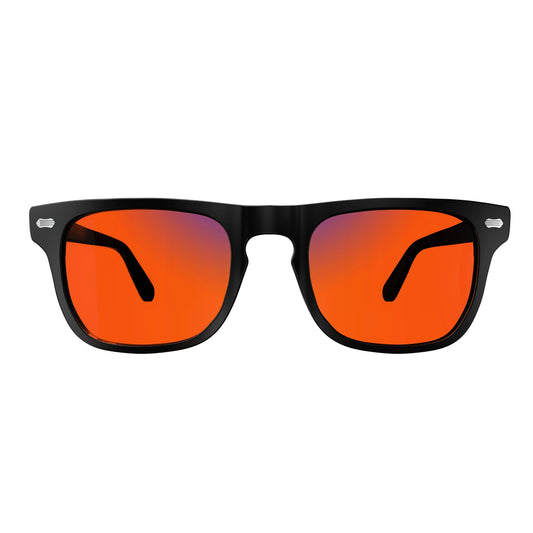
- The Migraine Photophobia Pathway (ipRGC → Trigeminal Nucleus) In 2010, Noseda et al. published a landmark paper in Nature Neuroscience demonstrating that ipRGCs in the retina send signals directly to the trigeminal nucleus caudalis — the brain’s primary pain-processing center for the head and face. This means light doesn’t just “bother” migraine patients — it actively amplifies pain through a dedicated neural pathway. FL-41 tinted lenses, first studied by Good et al. in 1991 at the University of Utah Moran Eye Center, were designed to filter the wavelengths (480–520nm) most strongly absorbed by the melanopsin photopigment in ipRGCs. By reducing the signal through this pathway, FL-41 lenses can reduce light-triggered discomfort in photophobic individuals.
- The Circadian Rhythm Pathway (ipRGC → SCN → Pineal Gland) The same ipRGCs that drive migraine pain also regulate the body’s circadian clock. They project to the suprachiasmatic nucleus (SCN) via the retinohypothalamic tract. The SCN uses this light information to synchronise the 24-hour sleep-wake cycle, controlling melatonin secretion from the pineal gland. When ipRGCs detect blue light (peaking at ~480nm) in the evening, they signal the SCN to suppress melatonin production — effectively telling the brain “it’s still daytime.” This is why screen usage before bed disrupts sleep: your retinal ipRGCs are sending a daytime signal to your circadian clock. Amber-tinted photobiological lenses are designed to block these specific melanopsinactivating wavelengths in the evening hours, allowing natural melatonin production to proceed. A 2009 study by Burkhart and Phelps in Chronobiology International demonstrated that amber lenses worn before bedtime significantly improved sleep quality and mood.
- The Visual Comfort Pathway (HEV Filtering for Daytime Use) High-energy visible (HEV) blue-violet light (380–420nm) contributes to visual discomfort during extended screen use. Unlike the broad “blue light blocking” approach of generic glasses, photobiological daytime lenses use yellow contrast-enhancing tints that filter the harshest HEV wavelengths while allowing enough blue light through to maintain alertness and natural circadian signalling during daytime hours. The Science: ipRGC Cells and Why They Changed Everything The discovery of intrinsically photosensitive retinal ganglion cells is arguably the most important finding in visual neuroscience since the characterisation of rods and cones. Timeline of Key Discoveries 2002 — Berson et al., Science: First identification of ipRGCs as a novel class of photoreceptors expressing the photopigment melanopsin (OPN4). These cells respond directly to light, independent of rods and cones. 2002 — Hattar et al., Science: Confirmed that melanopsin-expressing ipRGCs project to the SCN, establishing the neural basis for circadian photoentrainment. 2010 — Noseda et al., Nature Neuroscience: Demonstrated that ipRGCs project to the posterior thalamus, where they converge with dural nociceptive (pain) neurons. This provided the first mechanistic explanation for why light worsens migraine headaches. 2016 — Noseda et al., Brain: Showed that different wavelengths of light have different effects on migraine pain. Critically, they found that low-intensity green light (520–560nm) can actually reduce migraine pain intensity, while blue (~480nm) and amber/red (~590- 620nm) light exacerbate it. What This Means for Lens Design This research tells us exactly which wavelengths to filter and which to preserve: 480–520nm (blue-cyan): Strongest activation of melanopsin in ipRGCs. Linked to both migraine exacerbation and circadian disruption. This is the primary target for FL-41 filtration. 585–600nm (amber-red): Also activates pain pathways in migraine-prone individuals (Noseda 2016). Targeted by advanced dual-band approaches. 520–560nm (green): Associated with reduced pain perception. Should be preserved, not filtered. 460–490nm (deep blue): Peak melanopsin activation for circadian effects. Primary target for evening/sleep lenses. This is why photobiological eyewear cannot use a “one-size-fits-all” coating. Different biological problems require different spectral targets.
5 Key Differences Between Traditional and Photobiological Eyewear
Traditional eyewear has always been designed with a primary focus on optical function — such as vision correction and basic UV protection. While this serves visual clarity, it does not address how light interacts with the human brain and biological systems.
In contrast, photobiological eyewear is engineered based on neurobiology, specifically targeting pathways such as ipRGC (intrinsically photosensitive retinal ganglion cells), which play a key role in circadian rhythm regulation and light sensitivity.
When it comes to light management, traditional eyewear typically relies on broad-spectrum coatings or generic tints. These solutions are not precise and often treat all light in a similar manner. Photobiological eyewear, however, uses wavelength-specific precision filtration — meaning it selectively filters exact nanometer ranges of light that are known to impact sleep, alertness, or trigger conditions like migraine.
Another major difference lies in spectral data transparency. Traditional eyewear rarely provides detailed spectral information, leaving users unaware of what wavelengths are actually being filtered. Photobiological eyewear, on the other hand, is defined by clear nanometer targets — for example, selectively managing bands such as 480–520 nm that are biologically significant.
Clinical backing also separates the two. Traditional eyewear often uses generic claims like “blocks blue light,” without strong scientific grounding. Photobiological eyewear is developed based on published, peer-reviewed research, aligning with real biological responses rather than marketing assumptions.
Finally, product design philosophy is fundamentally different. Traditional eyewear usually follows a one-size-fits-all approach with a single coating or tint for all use cases. Photobiological eyewear is purpose-built — offering different lenses tailored for specific biological needs such as migraine relief, sleep support, or daytime performance.
Why India Needs Photobiological Eyewear
The importance of precision light management becomes even more critical in India due to the high prevalence of light-sensitive conditions.
India has an estimated migraine prevalence of 25–26% among adults, which translates to approximately 213 million individuals according to Global Burden of Disease (GBD) data. Among these individuals, 80–90% experience photophobia (light sensitivity) during migraine attacks, and up to 60% continue to experience light sensitivity even between episodes.
This clearly indicates that light is not just a visual factor — it acts as a neurological trigger for a significant portion of the population. Generic eyewear solutions are not designed to address this complexity, creating a strong need for scientifically engineered, photobiological solutions.
Yet until 2023, there was zero domestic manufacturing of FL-41 or wavelength-specific migraine eyewear. Sleep disruption: The proliferation of smartphones, LED lighting, and late-night screen usage has created an epidemic of circadian disruption. Indian adults spend an average of 7+ hours daily on screens. A 2019 AIIMS study found that over 93 million Indians suffer from sleep disorders.
The connection between evening blue light exposure and melatonin suppression is well-established (Gooley et al., 2011, Journal of Clinical Endocrinology & Metabolism), yet the solution marketed to Indian consumers is generic “blue light glasses” with unverified broad-spectrum coatings. Digital eye strain: Over 50% of screen workers globally report symptoms of digital eye strain (American Optometric Association).
The Indian IT sector alone employs over 5 million professionals spending 8–12 hours daily on screens. Despite these numbers, the Indian eyewear market has offered only two options: generic coated lenses from mass manufacturers, or expensive imports from international brands at high prices with no local clinical support.
The Birth of Sleepaxa — India’s First Photobiological Eyewear Company In 2023, Sleepaxa Private Limited was founded in Mumbai with a singular mission: to bring precision photobiological eyewear to India — designed, developed, and manufactured domestically. As a Senior Optometrist, I had spent years prescribing generic coated lenses to patients with migraine and light sensitivity, knowing that the science supported something far more precise.
When I studied the ipRGC research from Berson, Noseda, and others, it became clear that India needed its own photobiological eyewear — engineered from the molecular level, not imported or relabelled.
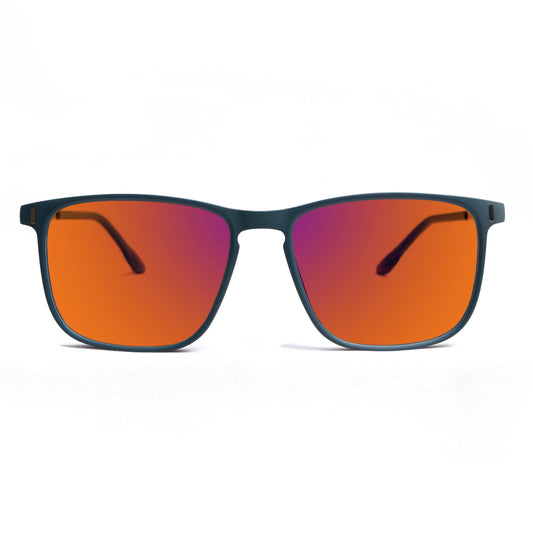
Today, Sleepaxa has: 6 patents (2 granted + 4 pending) covering novel lens filtration technologies NeuroCalm FLX+™ — A patented (IN 587746) dual-band selective light attenuation technology powering FL-41 migraine glasses. All 10 patent claims approved. Circadian560™ — A patented (IN 597482) technology that blocks peak 560nm blue light, powering the strongest blue light blocking sleep glasses in India. DayActive 1.0 — Yellow contrast-boost lenses for daytime productivity and gaming, allowing some blue light through to maintain alertness. Clinical Advisory Board led by Dr. Monica Chaudhry (Senior Optometrist, ex-AIIMS faculty) DPIIT recognition and CTRI registration 10,000+ pairs sold with offline presence in 7+ Indian cities Each product line uses a different proprietary lens technology for a different biological purpose — because photobiological eyewear, by definition, cannot be one-size-fits-all.
What’s Next for Photobiological Eyewear?
The field is still in its early stages. Future developments may include: Adaptive filtration lenses that adjust spectral profiles based on time of day or ambient lighting Personalised spectral prescriptions based on individual ipRGC sensitivity testing Integration with digital health platforms for monitoring light exposure and circadian alignment Expanded clinical trials, particularly in Indian populations, to establish country-specific efficacy data Insurance coverage frameworks for photobiological eyewear as a recognised nonpharmacological comfort tool The convergence of neuroscience, optical engineering, and personalised medicine is creating a future where eyewear is not just about seeing clearly — it’s about how light shapes our brain function, mood, sleep, and comfort.
Frequently Asked Questions
What is the difference between blue light glasses and photobiological eyewear?
Blue light glasses use a generic broad-spectrum coating that blocks some blue light across a wide range. Photobiological eyewear uses precision wavelength-selective filtration targeting specific nm bands based on published neuroscience — for example, targeting 480–520nm for migraine or 560nm peak for sleep. They are engineered for biological outcomes, not just generic light reduction. Are photobiological glasses the same as FL-41 glasses? FL-41 is one type of photobiological lens — specifically designed for migraine and photophobia by filtering 480–520nm wavelengths. Photobiological eyewear is a broader category that also includes circadian-optimised lenses (like amber/sleep glasses) and daytime performance lenses.
Do I need a prescription for photobiological eyewear?
Photobiological eyewear is available in both zero power and prescription options. Sleepaxa offers prescription lenses in CR-39, MR-8, and high-index (1.67, 1.74) with UV400, antireflective, and anti-scratch coatings.
Is photobiological eyewear a medical device?
No. Photobiological eyewear is precision-engineered comfort eyewear — not a medical device and not a substitute for clinical treatment. It is designed to support everyday wellbeing by managing how specific wavelengths of light reach the eyes.
What are ipRGCs and why do they matter?
Intrinsically photosensitive retinal ganglion cells (ipRGCs) are a third class of photoreceptors in the eye, discovered in 2002. They contain melanopsin and respond directly to light. They regulate circadian rhythms (via the SCN) and modulate pain pathways (via the trigeminal nucleus). They are the biological basis for why specific wavelengths of light affect sleep, migraine, and mood.
How is photobiological eyewear different from sunglasses?
Sunglasses reduce overall light intensity — they dim everything equally. Photobiological eyewear selectively filters specific wavelengths while allowing others through. Importantly, wearing dark sunglasses indoors can worsen photophobia through dark adaptation, whereas photobiological lenses like FL-41 can be worn comfortably indoors.
Who needs photobiological eyewear?
People experiencing migraine with photophobia, chronic light sensitivity, screen-related sleep disruption, shift workers, heavy screen users, students, gamers, and anyone seeking precision light management beyond generic blue light glasses.
Is Sleepaxa the only photobiological eyewear company in India?
As of 2026, Sleepaxa Private Limited is India’s first and only dedicated photobiological eyewear company with domestically engineered and patented lens technologies. International alternatives exist (TheraSpecs, Avulux from the USA) but at significantly higher prices and without local clinical support or prescription options.
How many patents does Sleepaxa hold?
Sleepaxa holds 6 patents: 2 granted (NeuroCalm FLX+™, IN 587746, all 10 claims approved; Circadian560™, Patent No. 597482) and 4 pending. What is NeuroCalm FLX+™? NeuroCalm FLX+™ is Sleepaxa’s patented dual-band selective light attenuation technology that powers FL-41 migraine glasses. It simultaneously filters two wavelength bands (460- 490nm and 585–600nm) while preserving the 520–560nm green band associated with reduced pain perception.
References
- Berson DM, Dunn FA, Takao M. Phototransduction by retinal ganglion cells that set the circadian clock. Science. 2002;295(5557):1070–1073.
- Hattar S, Liao HW, Takao M, Berson DM, Yau KW. Melanopsin-containing retinal ganglion cells: architecture, projections, and intrinsic photosensitivity. Science. 2002;295(5557):1065–1070.
- Noseda R, Kainz V, Jakubowski M, et al. A neural mechanism for exacerbation of headache by light. Nature Neuroscience. 2010;13(2):239–245.
- Noseda R, Bernstein CA, Nber RA, et al. Migraine photophobia originating in cone-driven retinal pathways. Brain. 2016;139(Pt 7):1971–1986.
- Good PA, Taylor RH, Mortimer MJ. The use of tinted spectacles in childhood migraine. Cephalalgia. 1991;11(Suppl 11):195–196.
- Hoggan RN, Subhash A, Blair S, et al. Thin-film optical notch filter spectacle coatings for the treatment of migraine and photophobia. Journal of Clinical Neuroscience. 2016;28:71–76.
- Gooley JJ, Chamberlain K, Smith KA, et al. Exposure to room light before bedtime suppresses melatonin onset and shortens melatonin duration in humans. Journal of Clinical Endocrinology & Metabolism. 2011;96(3):E463-E472.
- Burkhart K, Phelps JR. Amber lenses to block blue light and improve sleep: a randomized trial. Chronobiology International. 2009;26(8):1602–1612.
- Shechter A, Kim EW, St-Onge MP, Westwood AJ. Blocking nocturnal blue light for insomnia: A randomized controlled trial. Journal of Psychiatric Research. 2018;96:196- 202.
- Schmidt TM, Chen SK, Hattar S. Intrinsically photosensitive retinal ganglion cells: many subtypes, diverse functions. Trends in Neurosciences. 2011;34(11):572–580.
- Global Burden of Disease 2019 Headache Collaborators. Global, regional, and national burden of migraine and tension-type headache, 1990–2019. The Lancet. 2022;399(10332):1325–1340.
- Stovner LJ, Hagen K, Linde M, Steiner TJ. The global prevalence of headache: an update, with analysis of the influences of methodological factors on prevalence estimates. Journal of Headache and Pain.
2022;23(1):34. Suraj Dubey is the Founder & Head of R&D at Sleepaxa Private Limited (sleepaxa.in) — India’s first photobiological eyewear company. He is the inventor of NeuroCalm FLX+™ and Circadian560™, and holds 6 patents in photobiological lens technology.
Tags:
Previous
How Circadian Rhythm Disruption Affects Indian Professionals (2026) | Sleepaxa Science Guide
Next
What Are FL-41 Glasses? A Simple Guide to the Migraine Lens Most People Have Never Heard Of