
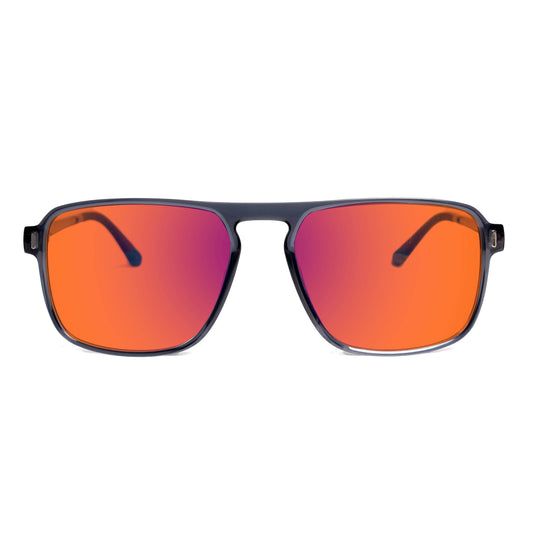
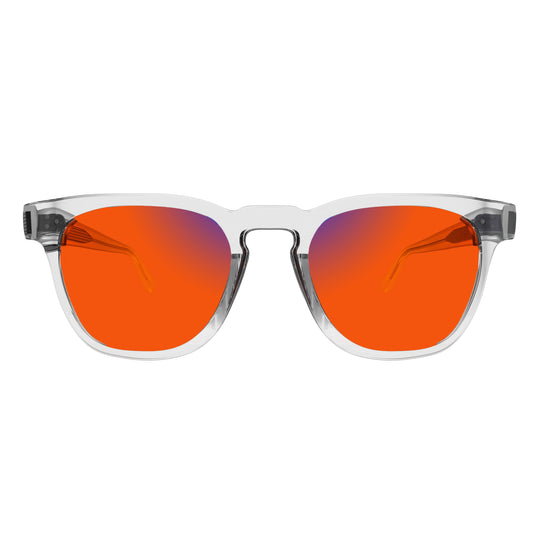
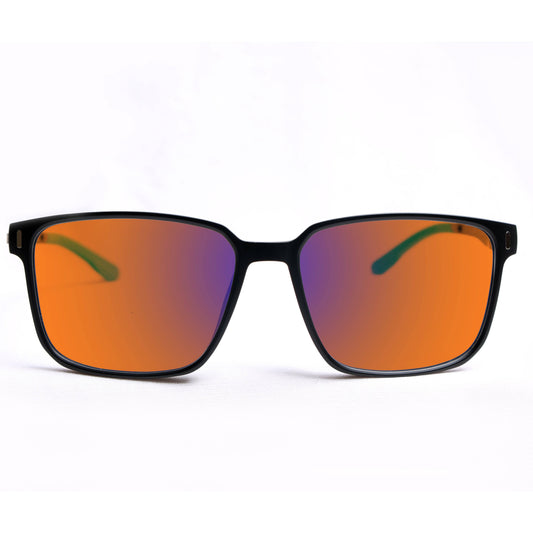

New Research: How Circadian560 Technology Blocks 99.95% of Sleep-Disrupting Light at the Melanopsin Peak - Published Data Inside
By Suraj Dubey | Senior Optometrist, Researcher & Innovator | Founder, Sleepaxa Private Limited
Patent: IN 587746 (Granted) | IN 202521120977 (Pending) | ORCID: 0009-0003-7510-9254
Published Peer-Reviewed Research by Sleepaxa R&D:
Paper 1: DOI: 10.5281/zenodo.19422123 - Wavelength-Selective Filtration in Photobiological Eyewear
Paper 2: DOI: 10.5281/zenodo.19500137 - ipRGC Subtypes, Signalling Pathways & Eyewear Design
Paper 3: DOI: 10.5281/zenodo.19547790 - NeuroCalm FLX+ Dual-Band Engineering Principles
Paper 4: DOI: 10.5281/zenodo.19596183 - Circadian560 Comprehensive Technical Review (v2.0)
Every night, over 750 million Indians stare at LED screens before sleep. Every night, that screen emits light at 440-470 nm - directly at the melanopsin photopigment in their retina. Every night, their pineal gland receives the signal: "It's daytime. Don't make melatonin."
Harvard researchers measured the damage: 85% melatonin suppression from ordinary room lighting. Not special lights. Not labs. Just a normally lit room.
We published our most comprehensive technical report to date on Zenodo - 25 peer-reviewed references, 5 clinical studies reviewed, and spectrometer-verified data showing what Circadian560 actually does at every wavelength from 280 nm to 780 nm.
The headline number: 0.00% transmission from 280 to 550 nm. Absolute zero.
What Is Melanopsin and Why Does It Matter?
Your retina has approximately 5,000 specialised cells called intrinsically photosensitive retinal ganglion cells (ipRGCs). They contain a photopigment called melanopsin (OPN4) that peaks at 480 nm but remains significantly active all the way to approximately 560 nm.
When melanopsin detects light in this range, it sends a direct signal to your suprachiasmatic nucleus (SCN) - your brain's master clock. The SCN tells your pineal gland: "It's still light outside. Stop making melatonin." Your body doesn't start preparing for sleep.
The critical point most people miss: melanopsin sensitivity doesn't stop at 480 nm. It extends through the green range with decreasing but still significant potency to approximately 560 nm. A lens that only blocks blue (to 480 nm) or light-cyan (to 500 nm) leaves a significant part of the melanopsin activation range completely open.
The Harvard Data: 85% Suppression from Room Lighting
| Measurement | Value | What It Means |
|---|---|---|
| Melatonin suppression | 85% | Nearly eliminated by normal room lighting (~200 lux) |
| DLMO delay | 90 min | Melatonin onset pushed back by 1.5 hours |
| Melatonin duration shortened | -90 min | Total melatonin window reduced by 1.5 hours |
Source: Gooley JJ, et al. (2011). JCEM. 96(3):E463-E472.
Why Melatonin Matters Beyond Sleep
Melatonin is not just a "sleep hormone." Our published research (DOI: 10.5281/zenodo.19596183) documents eight physiological systems affected:
| System | What Melatonin Does |
|---|---|
| Sleep | Primary hormonal darkness signal - initiates sleep onset |
| Body Temperature | Drives the core temperature drop that precedes natural sleep |
| Antioxidant Defence | Direct free radical scavenger - protects cells and mitochondria |
| Immune System | Modulates T-cell, NK cell activity, and cytokine production |
| Brain Protection | Reduces neuronal oxidative stress - neuroprotective |
| Metabolic Health | Influences insulin sensitivity and glucose metabolism |
| Mood | Disruption linked to depression and seasonal affective disorder |
| Cancer Risk | WHO classified circadian disruption as Group 2A probable carcinogen |
The Circadian560 Spectrometer Data: Absolute Zero from 280 to 550 nm
This is the core of our published research. Every number below is from spectrometer testing - no estimates, no claims without data.
| Wavelength | Transmittance | Blocking | What This Means |
|---|---|---|---|
| 280-550 nm | 0.00% | 100% | ABSOLUTE ZERO - complete blocking across entire melanopsin range |
| 560 nm (melanopsin boundary) | 0.08% | 99.95% | Near-total blocking at the defined upper boundary |
| 570 nm | 5.62% | 94.38% | Sharp transition begins - still blocking 94% |
| 580 nm | 24.56% | 75.44% | Transition zone - amber light starting to pass |
| 590 nm | 44.43% | - | Circadian-safe amber zone |
| 600 nm | 57.57% | - | Warm amber fully passing through |
| 620+ nm | 70-91% | - | Orange-red fully transmitted for comfortable evening vision |
| Additional Parameters | Value |
|---|---|
| Visible Light Transmittance (Tv) | 17.18% |
| Filter Category | 3 |
| UV-B (280-315 nm) | 0.00% - COMPLETE |
| UV-A (315-380 nm) | 0.00% - COMPLETE |
| Tsb Blue-Cyan (380-500 nm) | 0.00% - COMPLETE |
How Circadian560 Compares: Wavelength-by-Wavelength
| Wavelength | Melanopsin Sensitivity | Clear "Blue Light" Lens | Generic Amber | Circadian560 |
|---|---|---|---|---|
| 420 nm | ~30% | Partial | Variable | 0.00% - BLOCKED |
| 450 nm (LED peak) | ~65% | Partial | Variable | 0.00% - BLOCKED |
| 480 nm (PEAK) | 100% | MISSED | Variable | 0.00% - BLOCKED |
| 500 nm | ~80% | Not blocked | Often unblocked | 0.00% - BLOCKED |
| 520 nm | ~50% | Not blocked | Usually unblocked | 0.00% - BLOCKED |
| 540 nm | ~25% | Not blocked | Unblocked | 0.00% - BLOCKED |
| 560 nm (BOUNDARY) | ~10% | Not blocked | Unblocked | 0.08% - 99.95% |
| 580+ nm | <5% | Passes | Passes | TRANSMITTED |
The difference is clear: generic lenses leave major parts of the melanopsin range unblocked. Circadian560 blocks every single wavelength from 280 to 550 nm at absolute zero, and still blocks 99.95% at the 560 nm boundary.
5 Clinical Studies: Amber Lenses Work for Sleep
| Study | Year | Design | Finding |
|---|---|---|---|
| Burkhart & Phelps | 2009 | Randomised Crossover | Amber lenses improved sleep quality AND mood over 3 weeks |
| van der Lely et al. | 2015 | Controlled Crossover | Blocked alerting + melatonin-suppressing effects of LED screens in teenagers |
| Esaki et al. | 2016 | Controlled | Advanced circadian phase in delayed sleep phase disorder patients |
| Shechter et al. | 2018 | RCT Double-Blind | Improved sleep onset, quality, and duration in insomnia patients |
| Sasseville et al. | 2006 | Controlled | Completely prevented bright-light suppression of melatonin onset |
The Right Lens for the Right Time of Day
| When | Your Brain Needs | Right Lens | Wrong Choice |
|---|---|---|---|
| Morning & Daytime | Blue light for alertness | DayActive 1.0 (Yellow) | Amber at daytime blocks alerting signal |
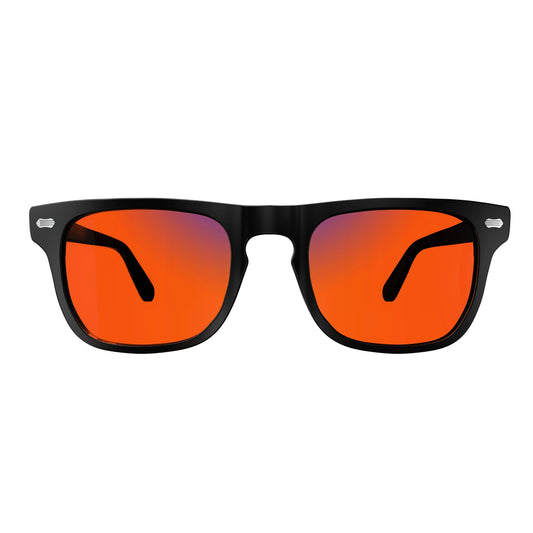
| Evening (2-3 hrs before bed) | NO blue light - let melatonin rise | Circadian560 (Amber) | Clear/Yellow allows melatonin suppression |
| During migraine | Block both pain pathways | NeuroCalm FLX+ (FL-41) | Generic blue light glasses |
Sleepaxa Patent Portfolio
GRANTED
NeuroCalm FLX+
Indian Patent IN 587746 | All 10 Claims Approved | Dual-band filtration for migraine: 460-490 nm + 585-600 nm with green band preservation
PENDING
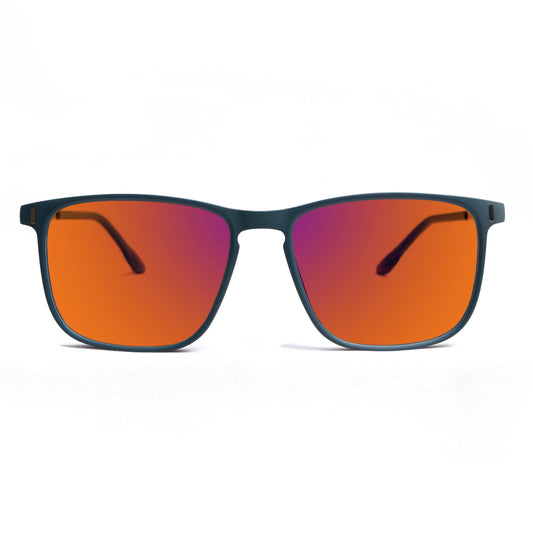
Circadian560
Indian Patent Application IN 202521120977 | 100% blocking at melanopsin peak extending to 560 nm boundary | 0.00% transmission verified across 280-550 nm
The Evening Protocol (Evidence-Based)
Step 1: Put on Circadian560 amber glasses 2-3 hours before your intended sleep time.
Step 2: Keep them on during ALL evening screen use. Even brief unfiltered exposure can partially reset melatonin suppression.
Step 3: Dim your room lights to warm-tone settings for maximum protection.
Step 4: Remove when entering your dark sleep environment.
Step 5: Do NOT wear during daytime - your brain needs morning blue light for alertness and circadian entrainment.
India's Sleep Crisis
| Statistic | Value |
|---|---|
| Indians with clinically significant sleep disorders | 93 million |
| Smartphone users | 750+ million |
| Indian photobiological sleep eyewear companies before 2023 | ZERO |
Frequently Asked Questions
What does 0.00% transmittance mean?
It means absolute zero light passes through at that wavelength. Our spectrometer measures transmittance in steps of 0.01%. At every wavelength from 280 to 550 nm, the reading is 0.00% - no detectable light passes through.
Why is 560 nm the cut-off?
At 560 nm, melanopsin sensitivity drops to approximately 10% of its peak. Above 560 nm, light has negligible circadian impact. Circadian560 is named after this science-defined boundary.
How is this different from generic amber glasses?
Generic amber lenses don't publish spectral data. They may block only to 480-500 nm, leaving the 500-560 nm extended melanopsin range exposed. Circadian560 blocks to 560 nm with verified data.
Should I wear these all day?
No. Amber lenses block the blue light your brain needs during daytime. Wear only 2-3 hours before bed. For daytime screen use, use DayActive 1.0 (yellow tint).
Is this a medical device?
No. Precision-engineered comfort eyewear designed around published circadian science. Not intended to treat, cure, or prevent any medical condition.
Available with prescription?
Yes. CR-39, MR-8, and high-index (1.67, 1.74) with UV400, anti-reflective, and anti-scratch coatings.
Where to buy?
sleepaxa.in/collections/sleep-glasses | Amazon India | 7+ partner cities
Read the Full Published Research
Sleepaxa Published Research (9 Papers, 9 DOIs):
1. DOI: 10.5281/zenodo.19422123 - Wavelength-Selective Filtration
2. DOI: 10.5281/zenodo.19500137 - ipRGC Subtypes & Pathways
3. DOI: 10.5281/zenodo.19547790 - NeuroCalm FLX+ Engineering
4. DOI: 10.5281/zenodo.19596183 - Circadian560 Technical Review (v2.0)
All papers open-access | ORCID: 0009-0003-7510-9254
References
- Gooley JJ, et al. (2011) Room light suppresses melatonin by 85%. JCEM. 96(3):E463-E472.
- Brainard GC, et al. (2001) Melatonin suppression action spectrum. J Neuroscience. 21(16):6405-6412.
- Thapan K, et al. (2001) Action spectrum for melatonin suppression. J Physiol. 535(1):261-267.
- Burkhart K, Phelps JR (2009) Amber lenses improve sleep quality (RCT). Chronobiol Int. 26(8):1602-1612.
- Shechter A, et al. (2018) Amber lenses improve insomnia (RCT). J Psychiatr Res. 96:196-202.
- van der Lely S, et al. (2015) Amber lenses block LED alerting in teens. J Adolesc Health. 56(1):113-119.
- Esaki Y, et al. (2016) Amber lenses advance circadian phase in DSPD. Chronobiol Int. 33(8):1037-1044.
- Sasseville A, et al. (2006) Orange lenses prevent melatonin suppression. J Pineal Res. 41(1):73-78.
- Berson DM, et al. (2002) ipRGC discovery. Science. 295:1070-1073.
- Reiter RJ, et al. (2016) Melatonin as antioxidant. J Pineal Res. 61(3):253-278.
- IARC Monographs Vol 98 (2010) - Shiftwork and cancer risk.
- Patent IN 587746 - NeuroCalm FLX+ (10 claims granted).
- Patent Application IN 202521120977 - Circadian560 (pending).
Suraj Dubey is the Founder & Head of R&D at Sleepaxa Private Limited (sleepaxa.in) - India's first photobiological eyewear company. ORCID: 0009-0003-7510-9254
Tags:
Previous
Why Blocking Blue Light Isn't Enough for Migraines | Sleepaxa
Next
Photophobia in Migraine: Why Light Hurts 170 Million Indians | Published Research & FL-41 Solution | Sleepaxa