

Photophobia in Migraine: Why Light Hurts 170 Million Indians | Published Research & FL-41 Solution | Sleepaxa
By Suraj Dubey | Senior Optometrist, Founder & Head of R&D, Sleepaxa Private Limited
If you have migraines, you know this feeling: the office lights feel like they're drilling into your skull. Your phone screen becomes unbearable. You reach for sunglasses indoors. You close every curtain. You retreat to a dark room and wait.
This isn't just "being sensitive." It's a clinical condition called photophobia — and it affects 80-90% of all migraine sufferers. In India, with 213 million migraine cases, that's approximately 170-190 million people whose daily lives are disrupted by light.
Our team has published a comprehensive research paper on this topic. Here's what the science says — and what you can do about it.
The Scale of the Problem: India's Migraine & Photophobia Burden
213M
Indians live with migraine annually
GBD 2019, The Lancet; PMC Scoping Review 2024
25.2%
Migraine prevalence among Indian adults — one of the highest globally
Karnataka Study, J Headache Pain 2015; Delhi NCR Study, J Headache Pain 2024
80-90%
of migraine patients experience photophobia during attacks
Digre & Brennan, J Neuro-Ophthalmology 2012
170-190M
Indians affected by migraine-related light sensitivity
Calculated from prevalence data
60%
experience light sensitivity even BETWEEN attacks (interictal photophobia)
Digre & Brennan 2012
3:1
Women are 3x more affected than men
Karnataka & Delhi NCR population studies
17.3 days
Annual productivity loss per migraine patient in India
PMC Scoping Review, 2024
₹18,674 Cr
Estimated annual economic loss from migraine in India (~USD 22.2 billion)
PMC Productivity Impact Study, 2024
Two landmark Indian population studies — the Karnataka study (2015, Journal of Headache and Pain) and the Delhi NCR study (2024, Journal of Headache and Pain) — both found migraine prevalence of approximately 25%, with higher rates among women (31.6% vs 18.5%) and rural populations. The researchers concluded these estimates can reasonably be extrapolated to all of India.
Despite these staggering numbers, most Indian eye care clinics have zero precision tools for managing photophobia. The standard advice remains "avoid bright lights" — impractical for any working adult.
What Exactly Is Photophobia?
Photophobia literally means "fear of light" — but the name is misleading. People with photophobia aren't scared of light. Light causes them physical pain.
There are two types that clinicians distinguish:
Ictal photophobia (during attacks) — affects 80-90% of migraine patients. Normal room lighting feels like staring into the sun. This drives patients to dark rooms, away from work, away from life.
Interictal photophobia (between attacks) — affects approximately 60% of migraine patients. This is the more disabling form: light sensitivity that persists on headache-free days. Fluorescent office lights, LED screens, shopping malls, driving — all become daily challenges.
Why Does Light Actually Cause Pain in Migraine?
For decades, doctors knew migraine patients were light-sensitive but couldn't explain the mechanism. Then came three discoveries that changed everything.
Discovery 1: The Hidden Light Sensor (2002)
Scientists found a new type of cell in the retina called ipRGCs (intrinsically photosensitive retinal ganglion cells). These cells don't help you see. They contain a protein called melanopsin that detects ambient light levels and sends signals directly to the brain's pain centre.
Discovery 2: How Light Amplifies Pain (2010)
Harvard researchers (Noseda et al., Nature Neuroscience) discovered that ipRGC signals converge with migraine pain signals on the same neurons in the brain's thalamus. When both are active simultaneously — light + headache — the pain is amplified:
RETINAL PATHWAY:
Light (480-520 nm) → melanopsin absorption → ipRGC activation → optic nerve → posterior thalamus
TRIGEMINAL PATHWAY:
Migraine activation → dural nociceptors → trigeminal nerve → posterior thalamus
CONVERGENCE: Both pathways meet at the same neurons. Light AMPLIFIES pain.
Light (480-520 nm) → melanopsin absorption → ipRGC activation → optic nerve → posterior thalamus
TRIGEMINAL PATHWAY:
Migraine activation → dural nociceptors → trigeminal nerve → posterior thalamus
CONVERGENCE: Both pathways meet at the same neurons. Light AMPLIFIES pain.
Discovery 3: It's Not Just Blue Light (2016)
Noseda's follow-up in Brain (2016) tested specific wavelengths on migraining patients:
460-520 nm
Blue-cyan
WORSENS pain
Melanopsin/ipRGC pathway
585-600 nm
Amber
WORSENS pain
Cone-driven pathway (separate mechanism)
620+ nm
Red
WORSENS pain (high intensity)
Cone-driven pathway
~530 nm
Green
REDUCES pain
Inhibitory cone circuit (proposed)
This means migraine photophobia involves TWO separate pain pathways — and green light is the only colour that helps. Any optical solution needs to address both pathways while preserving green.
⚠ WARNING: Dark Sunglasses Make Photophobia WORSE
This is critically important. Research from the University of Utah (Katz & Digre) shows that wearing dark sunglasses indoors creates a worsening cycle:
1. You wear dark lenses because light hurts → 2. Your retina dark-adapts (becomes MORE sensitive) → 3. Your pupils dilate permanently → 4. When you remove sunglasses, normal light feels WORSE → 5. You reach for darker sunglasses → 6. The cycle accelerates
Dark sunglasses reduce light by 80-90%. FL-41 reduces it by only 30-50% — enough to filter the pain-triggering wavelengths without triggering dark adaptation. This distinction is the difference between helping and harming.
What Does the Clinical Evidence Say?
| Study | Year | Key Finding |
|---|---|---|
| Good et al. | 1991 | FL-41 reduced migraine frequency by >50% in children |
| Blackburn et al. | 2009 | 71% preferred FL-41 over 6 other tints |
| Hoggan et al. | 2016 | Validated precision FL-41 coatings |
| Reyes et al. | 2024 | 76% reduced neural pathway activation |
| McAdams et al. | 2020 | fMRI confirmed melanopsin pathway |
The Solution: FL-41 Migraine Glasses & NeuroCalm FLX+
What Is FL-41?
FL-41 is a precision rose-pink tinted lens developed in 1991 at the University of Utah. It selectively filters the 480-520 nm wavelength band — the melanopsin activation range that drives the ipRGC pain pathway. Unlike dark sunglasses, FL-41 preserves enough overall light to prevent dark adaptation.
FL-41 is the most studied tint for migraine photophobia in published literature. It has been validated across multiple studies spanning over 30 years.
The Limitation of Standard FL-41
Standard FL-41 addresses only one of the two pain pathways (the melanopsin/ipRGC pathway at 480-520 nm). The second pathway — the cone-driven amber pathway at 585-600 nm identified by Noseda (2016) — remains unfiltered.
NeuroCalm FLX+™
PATENT GRANTED: IN 587746
PATENT GRANTED: IN 587746
Sleepaxa's NeuroCalm FLX+ is a dual-band selective light attenuation technology that addresses both pain pathways simultaneously. All 10 patent claims approved by the Indian Patent Office.
Band 1: 460-490 nm
Targets: Melanopsin/ipRGC pathway
Reduces the primary pain amplification signal from blue-cyan light
Band 2: 585-600 nm
Targets: Cone-driven amber pathway
Addresses the SECOND pain pathway that standard FL-41 misses
Preserved: 520-560 nm
Targets: Beneficial green band
Green light REDUCES migraine pain — this band is kept open
This dual-band approach cannot be achieved with conventional dye-based tinting. It requires precision optical engineering — which is why it's patented.
Available Products
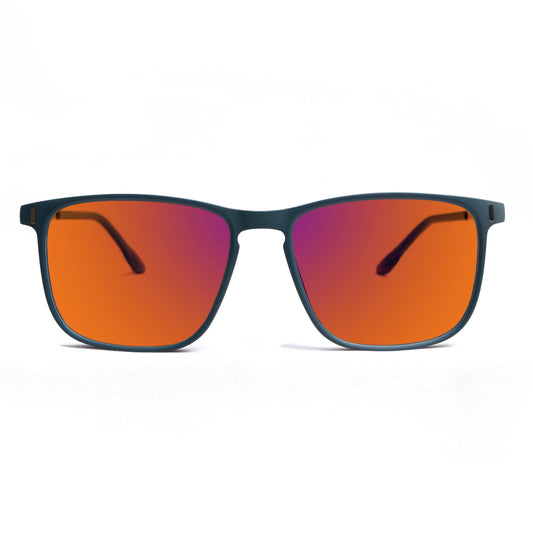
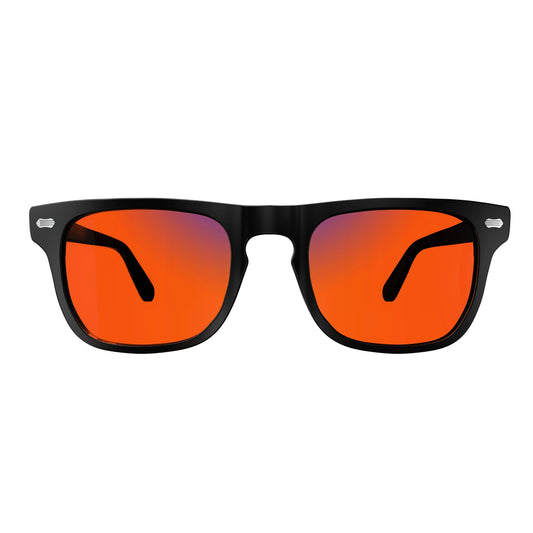
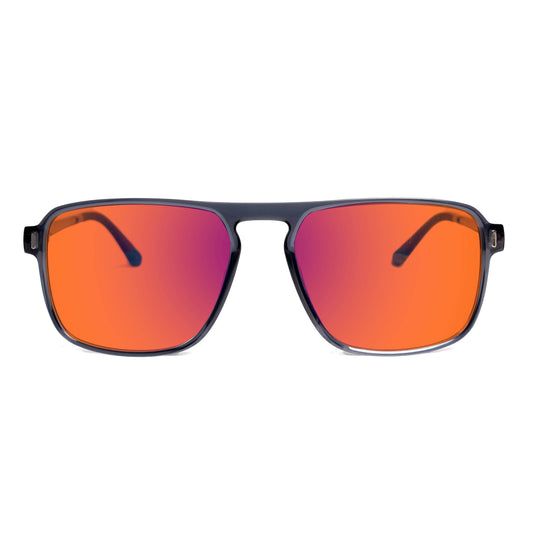
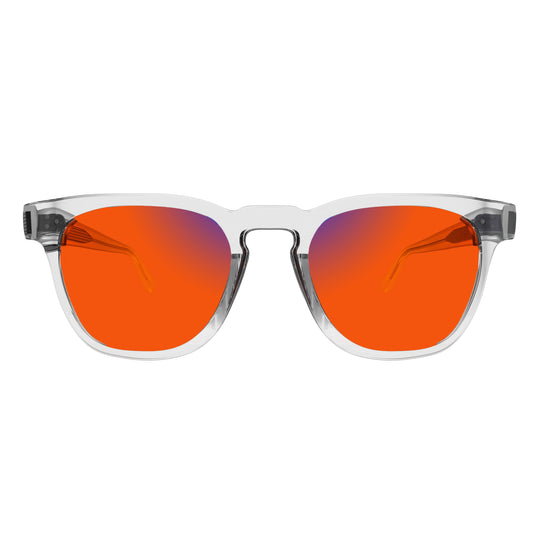
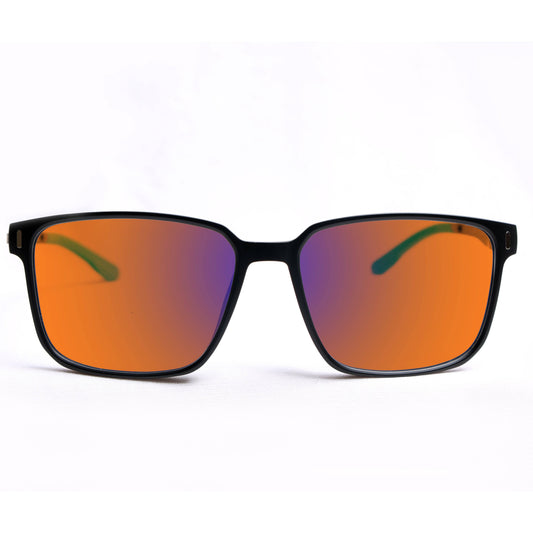
Sleepaxa FL-41 Migraine Glasses (powered by NeuroCalm FLX+) are available in multiple frame styles, all with:
• Zero power AND prescription options (CR-39, MR-8, high-index 1.67, 1.74)
• UV400 protection + anti-reflective + anti-scratch coatings
• Indian pricing (not imported luxury pricing)
• Expert WhatsApp support for fitting and queries
For evening use and sleep protection, Sleepaxa Amber Sleep Glasses (powered by Circadian560™, Patent Granted IN 597482) block 100% of blue light at the melanopsin peak. For daytime screen comfort, DayActive 1.0 provides yellow-tint HEV filtration without blocking alerting blue wavelengths.
Ready to Manage Your Light Sensitivity the Right Way?
Stop hiding behind dark sunglasses. Start filtering the right wavelengths.
Shop FL-41 Migraine Glasses Talk to Our Expert on WhatsAppOr visit your nearest Sleepaxa partner store:
Gurgaon NCR
New Delhi
Chennai
Vadodara
Lucknow
Agra
Surat
Also available on Amazon India • Free shipping across India • Prescription: 5-9 working days
Why Trust Sleepaxa?
| Credential | Detail |
|---|---|
| Patents | 6 patents (2 granted + 4 pending) — India's first photobiological eyewear IP portfolio |
| Published Research | 9 papers on Zenodo with permanent DOIs, indexed by OpenAIRE & Google Scholar |
| Clinical Advisory Board | Dr. Monica Chaudhry — Director MCVI, Ex-AIIMS Professor, Renowned Author & Optometrist |
| DPIIT Recognition | Government of India recognised startup |
| CTRI Registration | Clinical Trials Registry of India registered |
| Founder | Suraj Dubey — Senior Optometrist, 10+ years clinical experience, ORCID: 0009-0003-7510-9254 |
| Track Record | 10,000+ pairs sold • 7+ Indian cities offline • Prescription available |
Frequently Asked Questions
What is photophobia?
Photophobia is abnormal sensitivity to light that causes discomfort or pain. It affects 80-90% of migraine patients during attacks and approximately 60% between attacks. It is the most common non-headache symptom of migraine.
Why do dark sunglasses make photophobia worse?
Indoor sunglass use triggers dark adaptation — your retina becomes MORE sensitive over time. When you remove sunglasses, normal lighting feels even worse. FL-41's moderate tint (30-50% reduction vs 80-90% for sunglasses) avoids this cycle.
How is FL-41 different from blue light glasses?
Blue light glasses target 400-450 nm with broad coatings. FL-41 targets 480-520 nm — the melanopsin activation band that actually drives migraine photophobia. Different wavelengths, different mechanisms, different results. NeuroCalm FLX+ goes further by also filtering the amber pain pathway at 585-600 nm.
Will FL-41 glasses cure my migraines?
No. FL-41 glasses are comfort eyewear that helps manage light sensitivity — one of the most common migraine triggers and amplifiers. They are not a medical treatment for migraine itself. Published studies show they can reduce migraine frequency by over 50% when worn consistently, but they work best as part of a comprehensive management strategy with your neurologist.
Can I get FL-41 with my prescription?
Yes. Sleepaxa offers FL-41 (NeuroCalm FLX+) with prescription lenses in CR-39, MR-8, and high-index (1.67, 1.74). All prescription lenses include UV400, anti-reflective, and anti-scratch coatings. Delivery: 5-9 working days.
Where can I buy Sleepaxa FL-41 glasses?
Online at sleepaxa.in and Amazon India. Offline at partner optometrist stores in Gurgaon NCR, New Delhi, Chennai, Vadodara, Lucknow, Agra, and Surat. WhatsApp our expert for guidance: Chat now.
References
1. Noseda R, et al. A neural mechanism for exacerbation of headache by light. Nature Neuroscience. 2010;13(2):239-245.
2. Noseda R, et al. Migraine photophobia originating in cone-driven retinal pathways. Brain. 2016;139(Pt 7):1971-1986.
3. Good PA, et al. The use of tinted spectacles in childhood migraine. Cephalalgia. 1991;11(Suppl 11):195-196.
4. Digre KB, Brennan KC. Shedding light on photophobia. J Neuro-Ophthalmology. 2012;32(1):68-81.
5. Reyes N, et al. FL-41 Tint Reduces Activation of Neural Pathways of Photophobia. Am J Ophthalmol. 2024;259:172-184.
6. GBD 2019 Diseases and Injuries Collaborators. The Lancet. 2020;396:1204-1222.
7. Rao GN, et al. Headache disorders and public ill-health in India: Karnataka State. J Headache Pain. 2015;16:67.
8. Chowdhury D, et al. Headache prevalence in Delhi NCR. J Headache Pain. 2024;25:108.
9. Impact of migraine on productivity in India: a scoping review. PMC. 2024.
10. McAdams H, et al. Bright light exacerbates migraine via melanopsin-driven postretinal pathway. PNAS. 2020;117(25):14260-14267.
11. Berson DM, et al. Phototransduction by retinal ganglion cells. Science. 2002;295(5557):1070-1073.
Suraj Dubey is the Founder & Head of R&D at Sleepaxa Private Limited (sleepaxa.in) — India's first photobiological eyewear company. He is the inventor of NeuroCalm FLX+™ and Circadian560™, and holds 6 patents in photobiological lens technology. ORCID: 0009-0003-7510-9254
Tags:
Previous
New Research: How Circadian560 Technology Blocks 99.95% of Sleep-Disrupting Light at the Melanopsin Peak - Published Data Inside
Next
Light Sensitivity Epidemic India: 5 Factors Why 170 Million Indians Suffer | Published Research | Sleepaxa