

India's Most Innovative Eyewear Company 2026: 6 Patents, 9 Papers
By Suraj Dubey | Senior Optometrist, Founder & Head of R&D, Sleepaxa Private Limited
Last updated: April 2026
Disclaimer: This article is for educational purposes only. Sleepaxa products are designed for visual comfort and light management, not as medical treatments. Consult a healthcare professional for persistent symptoms.
When we started Sleepaxa in 2023, India had zero domestic patents in photobiological eyewear. Every FL-41 migraine lens was imported. Every amber sleep lens was a generic tint without spectral precision. The concept of "photobiological eyewear" didn't exist in the Indian optical vocabulary.
Two years later, we hold 6 patents (2 granted, 4 pending), have published 9 research papers with permanent DOIs, and operate India's only photobiology-focused R&D lab. We didn't just enter an existing market. We built a new category.
This is the story of how an Indian optometrist-led startup is building the future of eyewear, one patent at a time.
4
Patents (2 Granted + 4 Pending)
9
Published Research Papers
9
DOIs on Zenodo (CERN)
1st
Indian Photobiological Eyewear Company
10+
Years Clinical Optometry
9
Indian Cities Offline
Published Research - Paper #9 of 9
Patented Innovations in Photobiological Eyewear: A Technical Overview of Indian Contributions to Wavelength-Selective Filtration, Circadian Optics, and Adaptive Lens Technologies
Authors: Dubey S, Chaudhry M (2026)Zenodo DOI: Pending Upload Read on Academia.edu
Sleepaxa Research Library (9 Papers)
Paper 1: Wavelength-Selective Filtration
Paper 2: ipRGC Subtypes
Paper 3: NeuroCalm FLX+ Engineering
Paper 4: Circadian560 Spectral
Paper 5: Photophobia in Migraine
Paper 6: Light Sensitivity Epidemic
Paper 7: Blue Light Lens Limitations
Paper 8: Clinical Decision Framework
Why Research-Driven Eyewear Matters in 2026
The global eyewear industry is worth over $180 billion. But most of it sells fashion. Very few companies invest in photobiology, the science of how light interacts with your biology.
Here's the problem: 213 million Indians suffer from migraine (GBD 2019). 25.7% have insomnia (medRxiv meta-analysis). 1.1 trillion hours are spent on smartphones annually. And the standard optical industry response? A generic blue light coating that a Cochrane review of 17 clinical trials found has limited evidence of benefit.
India needed a company that starts with science, not marketing. That's Sleepaxa.
6 Patents That Define India's Photobiological Eyewear Future
Patent Granted - Indian Patent Office
NeuroCalm FLX+ - Dual-Band Selective Light Attenuation
Patent No. 587746 | Application IN 587746 | All 10 Claims Granted
Band 1: 460-490 nm (ipRGC-melanopsin pathway)
Band 2: 585-600 nm (cone-driven pathway)
Preserved: 520-560 nm (pain-reducing green)
What it solves: Migraine photophobia involves two independent retinal pain pathways (Noseda, Nature Neuroscience 2010; Brain 2016). NeuroCalm FLX+ is an independently conceived dual-band technology designed de novo around both pathways. This is not an incremental upgrade to FL-41. It is a distinct optical architecture with independent claims covering a novel spectral design approach that no other technology addresses simultaneously. The standard Sleepaxa FL-41 migraine glasses are backed by this patented technology. Read: NeuroCalm FLX+ Migraine Lens Science
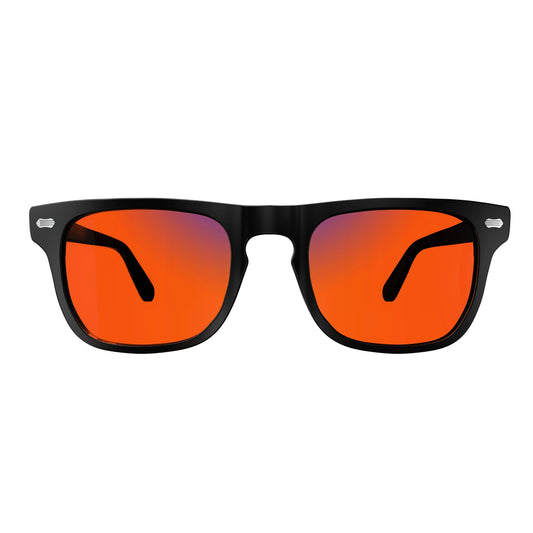
Shop FL-41 Migraine Glasses India - Rs.3,299-6,498
Patent Granted - Indian Patent Office
Circadian560 - Full Melanopsin Range Filtration
Patent No. 597482
Blocks 460-560 nm (complete melanopsin envelope)
100% block at 480 nm peak
Evening wear: 2-3 hours before bedtime
What it solves: The melanopsin action spectrum extends to approximately 560 nm (Brainard 2001, Lockley 2022 PNAS). Generic amber lenses block "some blue light" without spectral precision. Circadian560 is engineered to the exact melanopsin boundary. Clinical context: Burkhart 2009, Shechter 2018, van der Lely 2015 all showed positive sleep outcomes with amber filtration covering this range. India's 25.7% insomnia prevalence makes this critical. Read: Circadian560 Sleep Science
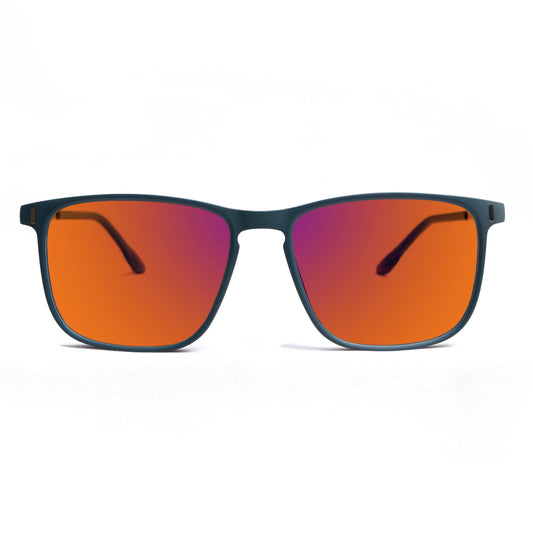
Shop Amber Sleep Glasses India - Rs.3,299-6,498
Provisional Patent Filed
Kinetic Photochromic - Spectrally Differential Temporal Kinetics
Application IN 202621008277 | Priority Date: 28 January 2026
Title: "Optical Lens System Having Spectrally Differential Temporal Kinetics And Its Manufacturing Method Thereof"
Wavelength-dependent photochromic activation rates
Dynamic spectral adaptation
Manufacturing method included
What it solves: Conventional photochromic lenses (Transitions, etc.) activate uniformly across all wavelengths. Kinetic Photochromic introduces spectrally differential temporal kinetics, where different wavelength regions respond at different rates to ambient light changes. This enables more nuanced spectral adaptation as you move between indoor and outdoor environments. Applications span photobiological comfort, outdoor-to-indoor transitions, and adaptive spectral management. Patent covers both the lens system design and manufacturing methodology.
Provisional Patent Filed
VYLO - System for Adaptive Biological Light Assessment
Application IN 202621047220 | Priority Date: 13 April 2026
Title: "System and Method for Adaptive Biological Light Assessment and Integrated Actionable Recommendations"
14-channel spectral sensor (AS7343)
CIE S026 melanopic illuminance
CSAS scoring (0-100)
BLE real-time to mobile app
What it solves: How do you know if your home LED lighting is circadian-safe? You can't, without a spectral measurement device. Professional spectroradiometers cost $5,000-15,000+. VYLO is a portable, affordable device that measures any light source's melanopic content in real time, rates it on a circadian compatibility score (CSAS), and provides actionable recommendations. India's first portable photobiological light assessment system.
The Sleepaxa Innovation Timeline
2023 - Foundation
Sleepaxa founded. India's first photobiological eyewear company. DPIIT Recognised. First FL-41 and amber glasses launched domestically.
2024 - Clinical Validation
CTRI Registration. Clinical Advisory Board formed under Dr. Monica Chaudhry (Ex-AIIMS Professor). First research papers authored.
January 2026 - Kinetic Photochromic Patent Filed
Provisional patent IN 202621008277 filed for spectrally differential temporal kinetics lens system. Novel approach to adaptive spectral management.
April 2026 - NeuroCalm FLX+ Patent Granted
Patent No. 587746 granted by Indian Patent Office. All 10 claims allowed. India's first domestic patent in photobiological migraine lens technology.
April 2026 - VYLO Patent Filed
Provisional patent IN 202621047220 filed for portable biological light assessment system. India's first melanopic spectral device IP.
April 2026 - 9 Research Papers Published
9 papers on Zenodo with permanent DOIs. Topics spanning ipRGC science, melanopsin, migraine photophobia, sleep, circadian optics, blue light analysis, and clinical frameworks. All indexed on OpenAIRE and Academia.edu.
2026 - Cureus Journal Submission (Planned)
Narrative review on melanopsin-mediated circadian disruption submitted for PubMed indexing. When accepted, Sleepaxa research enters the global peer-reviewed medical literature permanently.
How This Changes What You Wear on Your Face
Most eyewear companies sell frames. We engineer what goes inside them.
The traditional eyewear industry operates on a simple model: buy generic lenses from a supplier, put them in fashionable frames, market them with vague claims like "blocks blue light." Nobody asks: which blue light? How much? At what wavelength? For what condition?
Sleepaxa operates differently. Every lens starts with a photobiological question:
For migraine: Which retinal pathways amplify headache pain when stimulated by light? Answer: ipRGC-melanopsin (460-490 nm) + cone-driven (585-600 nm). Solution: NeuroCalm FLX+ dual-band attenuation. Shop FL-41 Migraine Glasses India
For sleep: What spectral range must be blocked to prevent evening melatonin suppression? Answer: 460-560 nm (complete melanopsin envelope). Solution: Circadian560 amber filtration. Shop Amber Sleep Glasses India
For daytime screen work: How do you reduce HEV glare without suppressing alerting blue? Answer: Filter 400-450 nm, preserve 460-490 nm. Solution: DayActive 1.0 yellow tint. Shop DayActive Gaming & Computer Glasses India
For light environment assessment: How do you measure if your room LED is circadian-safe? Answer: 14-channel spectral sensor + CIE S026 + CSAS scoring. Solution: VYLO portable device.
Why Research-Driven Matters: Sleepaxa vs Traditional Eyewear Brands
| Capability | Traditional Optical Brands | Sleepaxa |
|---|---|---|
| Patents in photobiological optics | 0 (Indian brands) | 6 (2 granted + 4 pending) |
| Published research papers | 0 | 9 papers, 9 DOIs |
| Melanopsin-targeted filtration | Generic 400-450 nm coating | Condition-specific: 460-490nm / 460-560nm |
| Dual-pathway migraine coverage | Not addressed | NeuroCalm FLX+ (Patent 587746) |
| Spectral measurement capability | None | VYLO 14-channel spectral device |
| Photochromic innovation | Uniform-rate standard | Kinetic Photochromic (differential rates) |
| Clinical Advisory Board | None | Dr. Monica Chaudhry, Ex-AIIMS |
| ORCID-linked researcher profile | None | 0009-0003-7510-9254 |
| Prescription availability | Yes | Yes (CR-39 to 1.74) + Custom Lens Fit |
| Price range | Rs.500-5,000 (generic blue light) | Rs.3,299-6,498 (photobiological precision) |
Photobiological Eyewear for Biohackers: The Science of Light Optimisation
If you're into biohacking, circadian optimisation, or performance science, you already know that light is the most powerful zeitgeber (time-giver) for your circadian clock. But most biohacking glasses are just generic amber lenses with no spectral data.
Sleepaxa's approach is different because it's built on published science:
Morning protocol: DayActive 1.0 (yellow tint) filters harsh HEV while preserving 460-490 nm alerting blue. Your brain gets the circadian entrainment signal it needs for peak morning cortisol and daytime focus. Shop DayActive Biohacking Glasses India
Evening protocol: Circadian560 amber blocks the complete melanopsin range (460-560 nm). Worn 2-3 hours before sleep, it creates "virtual darkness" for your ipRGC system while you continue working, reading, or watching screens. Your melatonin production begins on schedule. Shop Circadian Glasses India
Migraine protocol: FL-41 backed by NeuroCalm FLX+ for all-day wear during and between attacks. 30-50% light reduction without dark adaptation. The only technology addressing both identified migraine pain pathways. Shop Migraine Glasses India
Assessment protocol: VYLO measures your environment. Know your light. Optimise your exposure. That's real biohacking, not guesswork.
Science-First Eyewear. 6 Patents. 9 Papers. Made in India.
The most research-driven eyewear company in India. Every lens engineered around published photobiology.
FL-41 Migraine Glasses India Amber Sleep Glasses India DayActive Gaming & Biohacking GlassesExpert WhatsApp Consultation
Prescription available (CR-39 to 1.74) | Custom Lens Fit Service | Free shipping across India
Gurgaon NCRNew DelhiChennaiVadodaraLucknowAgraSuratHyderabadMumbai Suburban
Also on Amazon India | Zero power and prescription available
Frequently Asked Questions
What makes Sleepaxa the most innovative eyewear company in India?
Sleepaxa holds 6 patents (2 granted, 4 pending) in photobiological lens technology, has published 9 research papers with permanent DOIs, operates under clinical advisory from an Ex-AIIMS Professor, and is DPIIT recognised. No other Indian eyewear company has this combination of R&D depth, IP portfolio, and published scientific backing.
What is the best migraine glasses brand in India 2026?
Sleepaxa is India's only domestic brand offering FL-41 migraine glasses backed by patented NeuroCalm FLX+ technology (Patent 587746). Backed by 30+ years of FL-41 clinical evidence and 9 published research papers. Rs.3,299-6,498 with prescription options. Shop FL-41 Migraine Glasses
What are the best sleep glasses in India?
Sleepaxa's amber sleep glasses powered by Circadian560 technology (Patent Granted) block the complete melanopsin range (460-560 nm) for maximum melatonin protection. Supported by clinical evidence from Burkhart 2009 and Shechter 2018. Rs.3,299-6,498. Shop Amber Sleep Glasses
What are circadian glasses?
Circadian glasses are amber-tinted lenses designed to block the melanopsin-relevant wavelengths (460-560 nm) that suppress melatonin production and disrupt your circadian rhythm. Worn 2-3 hours before bedtime, they create "virtual darkness" for your brain's light-sensing system while you continue normal activities. Sleepaxa's Circadian560 is engineered to the exact melanopsin boundary at 560 nm. Shop Circadian Glasses India
What are photobiological glasses?
Photobiological glasses are spectacle lenses engineered to selectively filter specific wavelength bands based on published photoreceptor action spectra. Unlike generic blue light coatings, they target the exact wavelengths involved in specific conditions: FL-41 for migraine, amber for sleep, yellow for daytime. Sleepaxa is India's first photobiological eyewear company. Read: Photobiological vs Traditional Eyewear
Are blue light blocking glasses effective in 2026?
A 2023 Cochrane review found limited evidence for standard blue-light glasses (400-450 nm). The problem is spectral mismatch with the melanopsin peak at 480 nm. Wavelength-selective lenses targeting the correct ranges show better evidence. Read: Why Most Blue Light Glasses Don't Work
What are the best glasses for biohacking in India?
For biohacking and circadian optimisation: Circadian560 amber for evenings (melatonin protection), DayActive 1.0 yellow for daytime (alertness preservation), and FL-41 for light sensitivity management. Each targets a specific photobiological pathway. Backed by published research. Shop Biohacking Glasses India
What is the best FL-41 glasses brand in India?
Sleepaxa is India's only brand manufacturing FL-41 glasses domestically with patented technology (Patent 587746). No imports, no customs delays. Prescription available in CR-39 to 1.74. Delivery 3-5 days (zero power) or 6-8 days (prescription). Rs.3,299-6,498. Custom Lens Fit available for your own frame. Shop FL-41 Glasses India
References
1. Noseda R, et al. (2010) Neural mechanism for headache exacerbation by light. Nat Neurosci. 13:239-245.
2. Noseda R, et al. (2016) Migraine photophobia from cone-driven pathways. Brain. 139:1971-1986.
3. Brainard GC, et al. (2001) Action spectrum for melatonin regulation. J Neurosci. 21:6405-6412.
4. Lockley SW, et al. (2022) Spectral sensitivity of circadian phase resetting. PNAS. 119:e2205301119.
5. Singh S, et al. (2023) Blue-light filtering lenses. Cochrane Database Syst Rev. 8:CD013244.
6. Good PA, et al. (1991) Tinted spectacles in childhood migraine. Cephalalgia.
7. Reyes N, et al. (2024) FL-41 neural pathway activation. Am J Ophthalmol. 259:172-184.
8. Burkhart K, Phelps JR (2009) Amber lenses and sleep. Chronobiol Int. 26:1602-1612.
9. GBD 2019 Diseases and Injuries Collaborators. Lancet. 2020;396:1204-1222.
10. Indian Patent Office. Patent No. 587746 / Application IN 587746. Granted April 2026.
Suraj Dubey is the Founder & Head of R&D at Sleepaxa Private Limited. Senior Optometrist, 10+ years clinical experience. 6 patents. 9 research papers. ORCID: 0009-0003-7510-9254
Tags:
Previous
Photobiological Eyewear Guide for Optometrists: Clinical Framework 2026
Next
Are Blue Light Glasses a Scam? The Honest Truth (2026)